
FEATURES

Alice In Chains: It’s Evolution, Baby

AliceInChains

The devil’s in the details of Alice In Chains’ unlikely comeback

Jerry Cantrell doesn’t always take a shine to interviews, and really, who can blame him? It’s been a long hard road for the guitarist since Alice In Chains formed in a helter-skelter Seattle warehouse a quarter-century ago, a path littered with ominous magazine cover stories and rock journos asking as many questions about the excesses that swirled around the band as its music. But as the 47-year-old drives home from a meeting at Capitol Records just off Hollywood and Vine, he’s laughing and good-naturedly bitching about the logistics behind this summer’s tour. Maybe Cantrell’s excitement about Alice’s forthcoming full-length, The Devil Put Dinosaurs Here, has him in such a cheery mood. Or it could the subject matter he’s discussing, one of his favorites: destruction.

“You always have to start from fucking zero,” he says of the tearing-down process that precedes a new album. “The trick is forgetting that record. That’s over. We start from zero and say, ‘Let’s see what we can pull out of our asses.’”

Few bands survive the reboot Alice In Chains launched in 2008, six years after the death of its troubled powerhouse singer, Layne Staley. Cantrell admits the idea of reemerging from stasis with a new vocalist, William DuVall, felt like a gamble. “At the beginning, there wasn’t a whole lot of overwhelming support,” he says. “It was more of answering questions for ourselves, not for anyone else.”

The result was Black Gives Way To Blue, a work worthy of standing alongside the band’s masterpiece, 1992’s Dirt. Though few would have predicted such a return to form, the album was certified gold, topped scads of best-of lists and launched two full tours.

“It couldn’t have gone much better,” says Cantrell. “We did everything we wanted to do. We made a record we’re proud of, we reconnected with people, and we reignited the band and restarted our lives again. After that, it’s like, ‘OK, where do we go from here?’”

For DuVall, a veteran of the Southern hardcore scene that spawned Corrosion Of Conformity in the ’80s, that was a mind-bending riddle to solve, especially after playing to 70,000 in Brazil and headlining Madison Square Garden with his new mates.

“I’d gone to New York for years,” says the 45-year-old of his road-dog days with former bands, “and the running joke, especially when you’re touring in a broken-down station wagon, was when you passed the Garden, you say, ‘Drop me off at the gig.’ And this time, it really was the gig. You walk around the halls backstage and see all those framed pictures of everybody who had an impact, from the Stones to Muhammad Ali to Bob Dylan. It was joyous.”

The accolades and ecstasy delivered something unexpected when Alice headed back into the studio—a newfound sense of freedom. “On this record, the question of our very existence, at least, was settled,” says DuVall. “At that point, we’re not fighting for our right to be. That does allow for a smidgen of relief. Then there’s all the other stuff you put yourself through the paces about. Like the music.”

The Devil Put Dinosaurs Here stays true to the Alice In Chains sound, a dense shroud of gloom occasionally lifted by soaring harmonies and delicate riffs. For every dirge stomp like “Pretty Done” and the menacing creep of “Lab Monkey,” there are echoes of Jar Of Flies’ haunted acoustic beauty (“Voices,” “Choke”) or the filthy groove of “Stone,” the album’s second single. It’s also evidence of a step forward for the band, beginning with the message behind the title track.

“I’ve heard people say it and truly believe it—the devil put dinosaurs here to fool ya so you’ll believe (in evolution) and not go to heaven,” says Cantrell. “If what you believe in is teaching you to hurt somebody or tell somebody what they can or cannot do with their body, to legislate against somebody or enforce a prejudice—like the fuckin’ hate group God Hates Fags (Westboro Baptist Church)—it’s like, ‘Really?’”

For a band defined by turning its withering gaze inward, the song—and the decision to use it as the album’s title—is Alice’s boldest statement to date about the world it inhabits.

“We’ve always kept what we’ve had to say a little more veiled,” says Cantrell. “We had a few meetings about it—do we want to fuckin’ take this shit on? We’re not trying to make a campaign out of it. Sarcasm is a highly prized commodity in the Northwest. The song is said with a healthy dose of that.” Cantrell points to the chorus—“Jesus don’t like a queer/No problem with faith, just fear”—as proof it’s not an anti-religious screed. “We’ve got no problem with what you believe,” he says. “But fear-mongering and hindering people’s lives, that’s where you lose me.”

There’s a certain wry humor in a tune about Darwinism representing Alice In Chains’ evolution, and DuVall says his own growing pains as a frontman still make him chuckle. “I’m not a singer first—I’m a guitarist,” he says. “Anything involving moving around with a microphone and not holding a guitar—I don’t know how it happens.”

Vocally, the new album is a natural progression from the band’s eponymous 1995 release, which featured three songs with Cantrell on leads. Those duties are split almost evenly on Dinosaurs, and the harmonies are so tightly layered, it’s not always obvious who’s out front. DuVall says the illusion of a singular voice is by design. “It’s a fun game to play—how close can you get?” he says. “It sounds huge like a choir, but also like one person.”

Cantrell is best known as a guitar god, but his harmonies—and many of his lead singing efforts—have defined Alice In Chains nearly as much as his tortured solos and two-ton Iommi riffs. He says credit for pushing him further into the spotlight goes to his old songwriting partner.

“That started with the vocal sound Layne and I created together,” he says. “The more we went along, the more confidence and encouragement he gave me to sing some of my songs. It’s still something I have to work at very fuckin’ hard, especially when I’m standing next to someone as fuckin’ badass as Layne was. And William—he’s a pure singer. (Chris) Cornell, that’s a fuckin’ singer. I can’t do that shit.”

Thanks to DuVall, Alice In Chains also has a two-guitar attack in its arsenal. There’s no denying Cantrell’s leadership—he handles the bulk of the song- and lyric-writing duties—but on standout “Phantom Limb,” DuVall tears off his first solo. It’s the grunge equivalent of joining Led Zeppelin and hearing Jimmy Page tell you to take a bow. “He comes up with some really great riffs,” says Cantrell. “It’s important to for him to inject himself into the thing. It’s been good, especially live.”

Perhaps the only downside to growth is growing older, something Cantrell faced when opting for shoulder surgery in 2011 and delaying work on Dinosaurs for months. “It’s a repetitive motion injury,” he says. “You have a nice fuckin’ bad-posture slouch onstage and you’re working your arms and headbanging. That shit wears you out. A lot of my friends—Jason Newsted from Metallica, he’s had both shoulders done, same as me. He even had to do one twice. Dave Mustaine had his neck fused. Ed Van Halen’s got a fake hip.”

As Cantrell laughs at the perils of being an aging rock deity and DuVall talks of ramping up his strict pre-tour workout routine, one can’t help but think of the time when Alice In Chains was both defined and nearly destroyed by its demons. The band exists in a different place now, yet Cantrell still stands by his definition of Alice In Chains from nearly 20 years ago—taking something ugly and making it beautiful. “You can’t have one without the other,” he says. “You gotta go through the bad shit to get the good shit. It’s a fucking struggle. I still think that’s the case. And I’m proud of that.”

—Richard Rys

Posted in FEATURES | Leave a comment

The Veils: Absent-Minded

Veils

The Veils’ Finn Andrews never knows where he’ll go next

SXSW rages in the city around me as Skype trembles with Finn Andrews’ digitally warped sentences. My recording is a mess, and my notes sparse, but I’m left with a sense that the singer/songwriter behind the London-based Veils is that rare artist among rockers—a musician aware that his best songwriting occurs during his absence.

“I write a lot but it’s all generally just … um … shit,” Andrews says with a laugh. “The songs I ended up enjoying the most are the ones I don’t remember writing.”

Time Stays, We Go (Pitch Beast)—the band’s 10-track, fourth release—is both patiently restrained and wildly emotional. It’s full of lush brass and sing-along melodies, moments of surf-rock guitar and beachside ukulele, and essential personal queries within the struggles of the human endeavor. It’s a small dose of Pixies (“Dancing With The Tornado” remembers Frank Black’s vocals on “Mr. Grieves”), and definitely reminiscent of Talking Heads, with a nod toward Jeff Buckley. In other words, Time Stays has a familiar quality despite its newness, and it’s instantly likeable, much like Andrews himself.

The son of Barry Andrews, of XTC, he has spent much of his time “ping-ponging” between London, where his father lives, and New Zealand, his mother’s home, avoiding music until his teens, in part because of the environment he had been subjected to around his dad.

“There were always unwholesome, scary characters around the house,” says Andrews. “I didn’t want anything to do with it.”

Feeling like a foreigner in both homes, he says the music may have kept him grounded, tying him to his past and giving him a direction to pursue.

“I felt particularly childlike in music, and I thought that was because I started young,” says Andrews. “But I keep feeling that, and I’m surprised by it.”

Andrews repeatedly evokes the notion of the artist as conduit rather than creator—the urge to release the sculpture from the marble, as it were. It’s an urge often, um, veiled by the posturing and name-dropping that accompanies the average press kit or the concrete meadow of lanyards fluttering in the balmy Austin wind.

SXSW is the greatest media showcase on earth; it’s just a little overwhelming at times, and, at others, underwhelming. While the industry has produced many good bands lately, it has struggled to introduce a great band, at least to this listener.

While the Veils aren’t life-altering—like, say, Jeff Buckley or Radiohead—Time Stays does have time-stopping moments, despite the occasional cliché, such as “deep, dark woods” or “gather your rosebuds while ye may.” The latter—drawn from Robert Herrick poem “To The Virgins, To Make Much Of Time”—actually anchors the present against fears of black demise on “The Train With No Name.”

As Andrews himself heads into the dark tunnels of speculation that make up the industry around music, he carries only the desire to discover what he’s capable of.

“I never even remotely thought I would be doing what I’m doing with (music) now,” he says. “And I think that’s why I’m always sort of feeling I need to make another record and another—to learn more about it.”

—Matthew Irwin

Posted in FEATURES | Leave a comment

A Conversation With Fitz And The Tantrums

FitzAndTheTantrums

In 2010, Fitz And The Tantrums made their debut album with Pickin’ Up The Pieces. Whether the modern R&B album went triple platinum is inconsequential. Storming songs like “MoneyGrabber” put the band on Leno, Kimmel and Conan, and the soulful sound and fashion-forward sight of singer/songwriter Michael Fitzpatrick—with backing vocalist pal Noelle Scaggs and Fitz’s four additional members—made them suddenly ubiquitous. Along with that televised attention came constant touring. Nothing wrong with that. They sound like a tantrum, and their contemporary raw mix of Stax and Motown—with Fitzpatrick’s powerfully emotive vocals before it—was something to see. Now, they’re dropping their second album, More Than Just A Dream (Elektra), and the whole affair sounds as fast and hard as their live shows, with an odd electronic sheen to the proceedings. Fitzpatrick talked about his magnetic dream while driving to a studio session in Los Angeles.

I interviewed Daryl Hall the other day, and it came to pass that he dropped your name. He was mentioning how you were one of his faves, and how when you guys appeared on his Live From Daryl’s House, you impressed him by pulling out his very first single, “Girl, I Love You,” and singing that.
That’s hilarious. Yeah. That was an amazing day. I loved doing that, and he was so welcoming. When you do that show, they ask for songs of his that you might want to sing with him. Noelle and I figured that since everyone else always picks the ’80s hits of his, we’d go the other way, something more obscure. I knew his history and how he and Todd Rundgren were truly like the two first blue-eyed soul singers. Plus, I knew that the first single of his was totally rooted in Motown, so it just felt like the true beginning of his story.

So then, are you some sort of soul archivist/vinyl-collecting crate digger, or just an avid Hall fan?
I really am a lover of all soul music: Motown, Stax, Atlantic. I grew up with parents who were opera and classical fanatics. That was all they ever played in the house when we were growing up. The one bit of negotiation to their rule when I was a kid was that I was allowed to find and play the oldies station in the car while we were driving. When I heard the songs that I could best sing along to, the harmonies and such—really be a part of it—I became obsessed with soul from the ’60s. When I became a studio nerd and a tweaker and learned how to make records on my own in my living room, I just went back to that period and felt even more I love. I do love all music, though, and that we do have crate diggers in the band. Know what’s weirder? In my free time, I almost never listen to music anymore. You need to find a quiet space if you’re always on the road or the studio. Since I drive a lot in L.A., I’m either in silence or listening to NPR. That grounds me and rests my mind. I can’t listen to music casually.

I can appreciate that. There’s not much information about you and your musical past—bands, background vocals, anything. You’re not a kid, yet you seem to have popped out of nowhere. Is there a secret cabaret band or hair-metal act in your past?
I hated hair metal. I used to steal all of my brother’s new-wave albums, especially the New Romantic stuff. I did have bands in college, but you know what? I could not get arrested in the music biz to save my life. Nothing. Since all of that was pre-internet, there really is no incriminating evidence.

Quick aside: If you inherited your brother’s New Romantics albums, did the blousy shirts or pantaloons come with them?
I wish. One of the elements of this band is that we try to include elements of our personal style. We can’t help it. Noelle and I are clothes-shopping junkies.

Since we’re on the fashion tip, one more question. The white streak in your hair—was that inspired by the Damned’s Dave Vanian, the Cramps’ Bryan Gregory or Cruella de Vil?
None of the above. It’s natural, a genetic trait. A lot of my relatives on my mother’s side of the family have it. I just happen to have been lucky enough to have it come out in the center of my head. So many people think it’s some pretentious Flock Of Seagulls hairdo, but it’s all me.

Hey, I paid good money back in the day to maintain that level of pretension.
That said, if I had to align myself with any of those three people, it’d be Cruella.

There’s a lot of mythologizing as to how quickly it all happened for you, for Fitz. That all its members came together after one person called another person, and so on. Is that overdramatized?
Less than two weeks—nothing overstated at all. James King, who I went to college with, and I were working on songs that we loved. He recommended two people, then they recommended two people. That took two days. We rehearsed for two days. Nailed those songs down cold the first time out. I think that Noelle, I and the rest of the band were just in shock hearing the harmonies and the way it all gelled. Honestly, if we had thought about it, we might not have hit the stage so quickly. It was synergy for all of us, to say nothing of the fact that we had honed our individual crafts for years before this. When you consider that we booked and played our first gig within a week and a half of first meeting—not bad.

Is that a thing for you, doing stuff like that fast and hard?
When I’m in a studio, I’m not the technical guy or the neat guy. I’m messy, sloppy, quick and don’t label things. But I get it done. You know what, though? Maybe it’s because everything comes together so easily with this band that I can move through things quickly. Honestly, everything before this band was me putting round pegs in square holes. This is nothing but round pegs and bigger round holes.

Man, that doesn’t sound right. Do you feel as if the new album wouldn’t sound as it does if it weren’t for the fact that you guys toured relentlessly after the first one dropped? I saw you three times in the span of a year.
You could say that. We pretty quickly built up a reputation for putting on high-energy and dynamic shows. But with this album we wanted to close the gap between how we sound live and what the record sounds like. The first one didn’t have that. Our shows are a hot sweaty dance party—the church of music type of thing.

You wanted the new album to reflect the mess. You do a song called “Merry Go Round” where you infer how damn wearying the road is, and how miserably disconnected it makes you from the rest of the world. That’s no kind of party. That’s a pretty fascinating song to have, such a dour wrought emotion for a band that revels in the joy of the party.
You’re spot-on with that observation. It’s the ultimate in writing about what you know straight from the middle of being there. Look at it this way: I’ve waited my entire life to achieve this goal and have been playing music for 15 years with very little attention paid to what I did. Suddenly this. Every dream I’ve ever had came true. We’ve headlined festivals and been on Leno. Wow. Still, there was this period, after a while, where you become a nomad. You lose all connection to family, friends, your lover. Being a vagabond is a real tricky lifestyle. There’s a learning curve to the process. It makes you sad and confused. I have a hard time listening to that song. Very emotional. I know this is the way it works, but it totally threw me.

Here you are looking to duplicate or emulate the live sound. But more so than the last one, this record is layered, sequenced, electronic, even broader. Did a bit of boredom set in with your usual R&B-based sound or were you just fucking around?
Both. There’s a bunch of people in this band with diverse tastes. We wanted a challenge. We could have made Pickin’ Up The Pieces 2 and played it safe. My intuition said that wouldn’t have been the right call. We just kept experimenting and wrote tons of songs. We went far to the left, far to the right. The rule we had when we were recording was that no one was allowed to say that doesn’t sound like us. There’s plenty of through-line from our last record, but we really did want to go about things differently I’ve been following a lot of the online chatter about tracks that leaked—people are mad, disgusted and overjoyed. I can’t believe people are having a conversation about us, period, let alone some heated debate.

The R&B vibe isn’t on top on this album. It’s a layer. It ain’t the frosting—it’s the creamy middle.
Totally. And so many people heard the last album and thought “throwback,” but there was much other stuff happening, melodically, thematically. That album was more subtle about the kitchen-sink aspects of our sound. This time I think we’re bolder. Nothing subtle about it.

Also posted in GUEST EDITOR | Leave a comment

Beth Hart: Here Comes The (Bang) Boom

BethHart

Beth Hart’s dark period has made the light surrounding her new album even brighter

Beth Hart’s bio to this point in her 20-plus-year career is very nearly a blues cliché. A youthful beginning, doing great work while toiling in obscurity, struggling with alcohol and substances intended to keep her centered and grounded. It’s a boilerplate blues story, told many times with slight variations.

Thankfully, Hart’s recent triumphs have counterbalanced her ancient travails. Last December, Hart took the stage at the Kennedy Center Opera House in Washington, D.C., along with guitar icon Jeff Beck, and performed Etta James’ classic “I’d Rather Go Blind” to celebrate Kennedy Center honoree and blues legend Buddy Guy. Hart’s scorchingly soulful vocals and Beck’s sinewy guitar lines brought Guy and the audience to their feet; that performance has been added to the commercial pressing of Bang Bang Boom Boom (Provogue/Mascot), Hart’s powerfully diverse new album.

“That was pretty cool, wasn’t it?” says Hart with an incredulous laugh. “I couldn’t believe it! I was crying, watching it on YouTube.”

No less impressive is the range Hart exhibits on Bang Bang Boom Boom, her eighth studio set since her 1993 debut. While Hart retains her Joplin-esque blues style on Bang Bang—she wrote more than half of the songs alone—she folds elements of swing, jazz and pop into her thick blues gumbo. While she’s always been influenced by that broad spectrum, her work on Don’t Explain, her 2011 duet record with blues burner Joe Bonamassa, brought it to the surface.

“I’ve always been moved by different genres of music,” says Hart. “As a writer, I get bored fast, and I’m really afraid to repeat myself. I figure if I jump around to a lot of genres, there’s always going to be a different kind of lyric inspired; it’s going to stretch and challenge me. Ever since I did Don’t Explain with Joe, where I did styles that I’d never attempted before, but I’d been raised on—like Ella Fitzgerald and Billie Holiday and Big Joe Turner, and especially Otis Redding and Etta James, that hardcore soul—it set off a bell in my head. I was like, ‘This is the time to embrace a new challenge.’”

Hart credits veteran producer Kevin Shirley for much of Bang Bang’s success. Hart met Shirley during the Don’t Explain sessions; she was so impressed that she asked her manager to schedule him for her next album. Bang Bang would clearly have been a different animal without Shirley’s input, both sonically and philosophically.

“One thing I love particularly about working with Kevin is he works old-school fast,” says Hart. “When you come in, you’re going to record three to five songs that day. I was young; I hated the studio, because you’d first get the drum sound, and that would take two weeks, then you’d layer in the bass and guitar, then you sang to the track in your earphones. I never felt the pounding of the drum or the bass amp kicking my ass like when you’re onstage. Kevin did all that (live). When it came time, I sent him about 20 songs, but I sent him a lot of co-writing. He called me and said, ‘Knowing you, you’re hiding songs from me that you’ve written on your own, and I want to hear them. This isn’t about you getting on the radio or trying to please the record company. You’ve got to do what you love and believe in.’ That’s another thing I love about him: total artistic integrity.”

Shirley’s other major contribution to Bang Bang is a crack band comprised of guitarist Randy Flowers, bassist Michael Rhodes and keyboardist Arlan Schierbaum, along with drummers Anton Fig, Curt Bisquera and Herman Matthews, among others. Hart planned to use own band in the studio, but Shirley insisted on his session aces.

“He was adamant,” says Hart. “He said, ‘I do records fast. I know exactly what I want. I want to do anything that makes you happy, Beth, but I need you to trust me on this.’ He said, ‘I’m going to surround you with phenomenal players that, if you’ve written a song that morning, you can play it; they’ll learn it on the spot, we can do a couple passes, and you’ll have the song.’ I was like, ‘OK, that sounds great.’”

The core of Bang Bang is Hart’s deeply reflective and beautifully framed songs. Combined with the album’s short time frame and the band’s ability to immediately interpret Hart’s intentions, Bang Bang became a very in-the-moment project, and in that sense, she sees the album as a new beginning.

“I started on piano and was like, ‘Whoa, I don’t know what I’m doing’” says Hart. “Then I read an article with a quote from Leonard Bernstein, and he said, ‘When you stumble across a whole new way to do your craft, and you don’t know what you’re doing, enjoy every minute. What you’re about to write, you’ll never get to do again. It’s all coming from a fresh, challenging, totally in-the-dark, humbled place.’ That’s when ‘Swing My Thing’ was written.”

After a dozen years of sobriety, Hart is enjoying one of the most satisfying and fruitful periods of her career. In the late ’90s, she was poised to become a blues superstar, but she also teetered on the brink of being America’s Amy Winehouse, a supernaturally talented voice silenced all too soon.

“I think there was a spiritual intervention with God,” says Hart. “At my worst, it was five psych wards that year, and three rehabs. I didn’t really want to be around; I was just too scared to take myself out. But I was really hoping that I would die. I felt so ashamed.”

Looking back on darker days, Hart credits her mother’s strength and her husband Scott Guetzkow’s unconditional love with pulling her back from the edge. In 2000, she kicked her alcohol and prescription-medication dependencies (Dr. Drew Pinksy was her rehab medic, long before he was the star shrink), but then ignored her doctors who warned her that the worst was still ahead.

“I got great,” says Hart with a weary laugh. “I came all the way back. I was exercising, eating well, taking vitamins, going to lots of meetings, sober; I didn’t have the -ism to want to use, I was married, I made Leave The Light On. I told my doctors, ‘See, I told you.’ And they said, ‘No, kid, you’re a time bomb. You haven’t even peaked with this illness yet.’ They were right. When I hit 35, I made 37 Days, and at 36, I lost more touch with reality than I ever had. I didn’t get back on drugs or drinking; I just completely lost touch. That was really scary.”

Hart’s subsequent breakdown was almost as devastating as her substance abuse. A new psychiatrist found a better pharmacological cocktail to treat Hart’s bipolar symptoms, and now she’s in the best mental and physical shape of her life. With an extensive supporting tour for Bang Bang Boom Boom planned, and her second collaboration with Bonamassa nearly finished, Hart bristles with the energy of a boxer in the corner of the ring, bouncing in anticipation of the bell.

“When I finished this record, before I went in and recorded with Kevin, I looked at the work, and I noticed, for the first time, I had so much more positive love for myself and my life,” she says. “I saw it come across in songs like ‘Swing My Thing’ and ‘Spirit Of God.’ Also I was talking about being in love with my husband and expressing my appreciation for that love. I don’t think I’d ever done that before, and it was a really cool surprise.”

Also posted in GUEST EDITOR | 2 Comments

Thalia Zedek: The Harder They Come

ThaliaZedek

Via pushes Thalia Zedek’s solo work into kinder, (somewhat) gentler territory

“Walk Away” (download):

Audio clip: Adobe Flash Player (version 9 or above) is required to play this audio clip. Download the latest version here. You also need to have JavaScript enabled in your browser.

It can be daunting, being in a band that winds up one of the influential acts of its day. If Boston’s Come, one of the most acclaimed groups to emerge from the early-’90s indie scene, had released nothing but debut album Eleven:Eleven, its importance for musicians in that scene would likely have been established anyway. Hard, noirish, frequently violent in its approach to blues patterns and styles slowed to a molasses-drip pace, few bands hit as heavy as Come. And few musicians, in Come or elsewhere, came as hard to the stage and the studio as Thalia Zedek.

By the time she formed Come with Chris Brokaw, Arthur Johnson and Sean O’Brien, Zedek had pulled time in Uzi, Dangerous Birds and searing, staggeringly talented no-wave band Live Skull. When she threw in with Come, Zedek had spent years developing a performing style that was as necessarily forceful and emotive as it was thoughtful and personal. Zedek’s voice, a ragged-yet-powerful instrument that sounded like it had years of hard living underneath it, was basically the middle knuckle of Come’s heart-punch, the one that stuck out farthest and really left a bruise. Her guitar work, set against Brokaw’s equally riveting but somewhat more reserved playing, lent a constant tension to Come’s best recordings that makes Eleven:Eleven and strangely undervalued final bow Gently, Down The Stream two of the strongest albums to emerge from their era.

That Zedek was a woman in what was largely a boys-club scene; that she was a lesbian in the middle of an era wherein to be out was still to catch an inordinate amount of shit even from one’s colleagues; that she was essentially a melodic songwriter in the context of a series of noise-heavy bands; and that she spent some years struggling with hard drug addiction in the middle of an epidemic, could easily have made her a casualty of the era. There were several realities in play that might have caused Zedek to implode, or burn out, or otherwise cut short what’s become a striking solo career writing and recording dark Americana music.

But sometimes the brutal, stupid world cuts even good people a break, and none of those things happened. What happened instead was that Zedek began crafting a series of haunting, haunted albums that drew from her noisy past and looked into a calmer future. And now comes Via (Thrill Jockey), a record that finds Zedek striking off in new aesthetic and collaborative territory.

It started, in a strange kind of Spinal-Tap way, with the sudden departure of drummer Daniel Coughlin, who’d played on Come’s final recordings as well as Zedek’s solo albums.

“Daniel moved to Buenos Aires,” she laughs, as if saying it aloud still weirds her out a little. “It was completely amicable, I should add. His wife got a job, and it was a really great opportunity.” Still, Coughlin’s departure put a gap in the band, and Zedek began looking around, finally landing on Son Volt’s Dave Bryson.

“We’d been working on songs that had been written while Daniel was in the band, just after (2008’s) Liars And Prayers,” says Zedek. “But when Dave and I met, we hit it off immediately, and at first we didn’t really spend a lot of time learning older things. We did some of that, but we also started writing right away. So, Via kind of represents two different eras: stuff that we were working on while Daniel was still in the band, and new stuff we wrote after Dave arrived.”

It may seem like a small change, but Bryson’s playing style pushed Zedek’s music, if subtly, into a different register.

“It’s not that Dave is a ‘better’ drummer than Daniel,” Zedek says carefully. “If you ever saw Daniel live, he’s one of these drummers you just can’t take your eyes off of. He’s amazing, and he’d been with me for 13 years. But Dave’s style is much more relaxed. I didn’t even realize that, really, until we’d begun to mix what we’d recorded. Dave’s playing is a lot more spacious, and as a result, there’s a lot of room for things to happen in the performance. I remember thinking, as I was mixing, ‘God, this guy’s like Charlie Watts.’ Really open and laid-back. And I found that had changed the way I was playing.”

Andrew Schneider, who’d recorded and engineered Liars And Prayers, worked with Zedek on recording Via as well. Coupled with the changes in rhythm, Schneider’s shaping of the growing album’s sound caused Zedek to feel a bit cautious, at least initially.

“Andrew was doing all the engineering,” she says. “It was a little disconcerting to me, because I use a lot of different vocal styles on different songs. But this time I felt like I had the license from my band members to bring people in and out of the mix more, so I did more arranging in the course of mixing than I had previously. I did a lot more arranging during the mix than I have in the past.”

At first, Zedek frames her stronger production hand as a matter of increased confidence—an odd word to this listener, since lack of confidence wouldn’t seem to be a problem for the forthright, self-assured songwriter.

“Well, probably it’s not that I lacked confidence in myself,” she says, “as much as I spent a lot of time thinking about other people’s feelings. (With Via) I felt more like, ‘This is my record.’ It was a matter of having the confidence that I was going to be making the editorial decisions. You know, Come broke up in ’99, and then I went solo. But I don’t really write songs that are meant to just be played on guitar. And when I used to go out and play some of the Come songs solo, some people used to ask, ‘How can you play those songs without the band?’ I didn’t want to be beholden to anyone in that way. I didn’t want to feel tied down to anyone, and I didn’t want anyone to feel tied down to me. So, I thought, ‘OK, if I front this band, the Thalia Zedek Band, I can play with different people and still own these songs, in a way.’”

Zedek’s fourth album, in many ways, sounds like the most confident of her solo records. She still mines the “old, weird America”—the dark poetry, the stories of loss and redemption that have characterized her work for years now. And much of the language on Via still puts her declamatory voice, her primary tool of self-protection, in the forefront, right down to the song titles: “Walk Away,” “Get Away,” “Go Home.” But shelved just beside those songs are others—“Straight And Strong” and “Lucky One”—that seem to speak of the determination that comes with earned longevity. As the closing scream of “Winning Hand” has it, “I’ll get there some-how!!!”

In matters having to do with longevity and survival, Zedek knows whereof she speaks. Up next after the release of Via is a handful of shows with Brokeback, followed by a support stint on Low’s West Coast tour, then a month-long residency at TT The Bear’s Place in Cambridge, Mass., to coincide with the venerable club’s 40th anniversary. And Matador is re-releasing Eleven:Eleven in May. In all, it’s a full slate for a working musician, who’s learned that sometimes the best things result from selecting the right parts.

“It wasn’t an agonizing process, going solo, but I wanted to give myself room to change and grow,” she says. “When you have two guitars, bass and drums, all your songs are going to sound that way. My strategy has always been to pick really good people and let them do what they want. Three people can play together and sound amazing, but if you put them in another context, they’ll sound totally different. That chemistry in a band, that’s important to me. It’s important to listen.”

—Eric Waggoner

Also posted in FREE MP3s, GUEST EDITOR | 1 Comment

Spacehog: They Come In Peace

Spacehog

For its second invasion, Spacehog orchestrates a soft landing.

“Sunset Boulevard” (download):

Audio clip: Adobe Flash Player (version 9 or above) is required to play this audio clip. Download the latest version here. You also need to have JavaScript enabled in your browser.

Spacehog really is a band without a country—even if it doesn’t quite see it that way. “Back home in Britain, we were very much ostracized,” says Royston Langdon, the group’s vocalist/bassist. “We were signed in America and were living in New York. We were on another planet, in some ways.”

Born and raised in Leeds, England, sibling bandleaders Royston and Antony Langdon immigrated to the United States about 20 years ago. Older brother Antony followed a girlfriend to New York City. Royston, meanwhile, had grown increasingly frustrated with his role in Leeds outfit the Zeroes, and needed an out.

“I was getting a bit bored,” Royston told me back in 1996, some months after the release of Spacehog’s major-label debut, Resident Alien. “The whole rave thing was going on, and nobody went to see bands. Everybody just saved all their money to buy drugs all week and did a weekender.”

In New York, the Langdons initially struggled to get it together. When the two weren’t partying to excess or working shitty day jobs, they were sequestered in an apartment writing songs and jamming. In their search for collaborators, they found drummer Jonny Cragg, another Brit who’d escaped to New York, reinforcing their ranks eight months later with guitarist Richard Steel, who flew in from England at Cragg’s behest.

By 1995, the ongoing campaign to nudge more English bands back atop the American charts had netted (at best) mixed results, with Oasis pretty much the lone beneficiary. Then, along came Spacehog’s “In The Meantime,” the meteoric spew of giddy glam-metal conviction that kicked off Resident Alien, a joyously theatrical, near-flawless debut. (The title referred to the members’ living status at the time.) A number-one hit in the U.S. and an MTV favorite, the single helped Resident Alien go gold. Back home, however, most of their Britpop-addled countrymen were unimpressed.

“We were inauthentic,” says Cragg today. “We got thrown in with all that mid-’90s alternative rock. We enjoyed the benefits, of course. But we really didn’t have all that much in common with a lot of the other bands out there.”

And time was running out on the current music-industry model. “It was like the last days of the Roman Empire,” says Cragg. “Record companies were basically just signing rock bands, and a lot of them were having hits and selling lots of CDs. It seems so alien to talk about that now—so long ago.”

“We sort of started off at the top—coming from a place of abundance,” says Royston. “It was exciting; it was scary. I was very unprepared. I’m grateful that it happened, but with the benefit of hindsight, I might have approached it differently.”

In the 17 years since its auspicious start, plenty has happened to Spacehog—some of it not so great. And still, the group’s new release, the mostly excellent As It Is On Earth (Hog Space), carries on almost as if there were no gaping 12 years of dead air since the inconsequential 2001 release of the band’s last album, The Hogyssey. As It Is On Earth displays none of the derivative Bowie/T.Rex laziness of its predecessor, while harnessing manageable doses of the antsy experimental energy that fueled Resident Alien’s expansive 1998 follow-up, The Chinese Album. “It sounds like a natural, organic development from where we were as young men,” says Cragg.

The members of Spacehog were still relatively young men when they disbanded in 2001, shortly after a massive tour with the Black Crowes and Oasis. At the time, Royston was in the honeymoon phase of his relationship with actress Liv Tyler—a marriage that resulted in a son in 2004 and an amicable divorce four years later. After a short-lived project with former members of Blind Melon, he regrouped with Antony and another Langston brother, Christian, to form electro-punk outfit Arckid, which Cragg subsequently joined.

It was at Cragg’s “21st” birthday party in Brooklyn that Spacehog reassembled in 2006. “I don’t know if any of us were really chomping at the bit to get together, but I didn’t want to be the one to say no,” says Steel. “We didn’t rehearse or anything, but it was really nice to see each other again.”

With Antony living in L.A., Royston sampling the West Coast and the rest of the band in New York, geographic challenges meant that this reunion would come in fits and starts. But everyone seemed to come together when it came time to record As It Is On Earth. “There were a lot of false starts for me, really,” says Royston, who mentions an aborted solo project, work with Evan Dando and some serious woodshedding in upstate New York—all of which amounted to little. “It all sort of compounded the feeling that maybe we did have something with Spacehog.”

Although they’re now living on opposite coasts, the Langston brothers’ dueling creative temperaments again figure prominently on As It Is On Earth, as does the deft touch of original producer Bryce Goggin. Now that he’s taken a few more lumps in life, Royston’s cultured, over-the-top vocal theatrics and psychodramatic songwriting find a bit more perspective and resonance, while Antony’s grand-scale guitar work is less of a distraction and more of an asset.

As is the norm with any worthwhile Spacehog release, a flair for the dramatic (seven-minute slow-burn of an opener “Deceit”) is tempered by a parodic caginess (“Bonnie & Clyde,” “Dinosaur”). It’s also apparent that considerable thought and craftsmanship went into Earth, no doubt aided by a successful fan-funded effort via Pledge Music.

“I’m sort of past caring whether people give a shit or not,” says Cragg. “All I know is that when I listen to the record we’ve made—one that’s taken a long time and a lot of anguish—it sounds fucking brilliant. If people think we suck, then it can only be because of how we’re perceived, and not because of the music.”

Although he made a significant contribution As It Is On Earth, commitments on the West Coast—including an ongoing project with Joaquin Phoenix—have compelled Antony to bow out of any touring behind the album. Old friend Timo Ellis (Cibo Matto, Netherlands) is filling in on guitar as the band preps for the shows that are likely to follow the album’s release. Ever the showman, Antony will be missed onstage.

“My brother has a wild energy that’s very paradoxical,” says Royston. “It’s a blessing and a curse—and, in terms of musicality, maybe not so good. We’ve certainly lost something, but we’ve gained a lot, too. It feels good.”

—Hobart Rowland

Also posted in FREE MP3s, GUEST EDITOR | 1 Comment

Josh Rouse: The American

JoshRouse

Josh Rouse diverts from his extended Spanish holiday with The Happiness Waltz

“I hope it wasn’t too much of a left turn—maybe a bit of a surprise.”

Josh Rouse is trying to convince his interviewer—and perhaps himself—that his 2006 relocation to Spain didn’t completely alienate his American fan base. It hasn’t, really. But he can’t deny that life overseas has done a number on him.

“It’s different—the hours are different,” says Rouse, who was born in Nebraska and bounced around the country as an adolescent and young adult. “I won ‘musician of the year’ in Valencia, so they kind of consider me one of their own, which is crazy. I did some songs in Spanish, and the press over here didn’t like that. All the Spanish artists are singing in English, and they don’t sound very good.”

A failed first marriage prompted Rouse’s move from Nashville to Spain, where a relationship with artist Paz Suay has led to a (mostly) blissful family life in the country’s third largest city. “About every week, I get fed up with it and go, ‘Pack your fuckin’ bags, we’re moving back to the States,’” he laughs. “Now, whenever anything goes wrong, I blame it on Spain.”

Rouse returned to the U.S. briefly, living in Brooklyn with his wife and embarking an admittedly underwhelming tour behind 2007’s Country Mouse City House. Then Suay became pregnant with their first child, and access to the in-laws and the prospect of a more stable life lured them back to Spain. Rouse is now the father of two young boys, and his frequent This Is 40-style befuddlement laid the thematic groundwork for The Happiness Waltz (Yep Roc).

His ninth proper solo album is an overdue return to the tastefully swinging and sophisticated folk/pop that elevated 1972 and Nashville, both recorded not long before his Spanish immersion. Producer Brad Jones was the common denominator on those albums, and he returns for The Happiness Waltz, which was recorded at Rouse’s home studio in Valencia and finished at Jones’ Alex The Great Recording in Nashville. “The idea was not to do jazzy, moody songs,” says Rouse. “Although it’s moody, it’s also pretty poppy.”

In the purest write-what-you-know fashion, The Happiness Waltz’s dozen tracks constitute a thorough mulling of Rouse’s domesticated status, and the antsiness, boredom, astonishment and rapture that ensues, often within the span of 24 hours. When he’s not making his point in rather obvious ways (“Simple Pleasure,” “Our Love,” “Start A Family”), Rouse turns coyly impressionistic, as on the immediately memorable “Julie (Come Out Of The Rain),” the subtle and profound “Purple And Beige” and modest, low-mood epic “The Ocean.” Largely acoustic-based, but lush nonetheless, the instrumentation and arrangements feel effortless, belying an attention to detail that could’ve been suffocating—but rarely is. If anything, The Happiness Waltz—despite the internal battles waged in its lyrics—is a little too relaxed. It’s Middle American daddy angst with a sleepy Spanish pulse.

“I’m an only child, so I was used to everything being about me,” says Rouse. “Then I had kids, and it wasn’t about me anymore—and that’s hard. I’m still trying to accept it. But I get better at it every day.”

—Hobart Rowland

Also posted in GUEST EDITOR | Leave a comment

The Mary Onettes: They Love The ’80s

TheMaryOnettes

Oddly evolving Swedes the Mary Onettes indulge in cheese, pass on pop. 

“I like to call it cheesy, but in a good way.”

That’s how Philip Ekström describes Hit The Waves (Labrador), the new album from his band, the Mary Onettes. It’s the long-awaited third full-length from the Gothenburg, Sweden, quartet, and it largely abandons the soaring pop that was the Mary Onettes’ hallmark on its 2007 self-titled debut and 2009’s Islands. Those albums earned the quartet comparisons to the Cure and Echo & The Bunnymen, although polished with a modern synth-pop sheen. Hit The Waves draws likewise from the ’80s, but instead of tuneful post-punk, it deliberately echoes some less trendy sources.

“We used a lot of synthesizers and sounds that maybe people would be like, ‘Oh no, don’t do that!’” says Ekström, who speaks quietly, but laughs often as he talks about the album. “Some artists that were big in the ’60s and ’70s, when the ’80s came, (they) didn’t know what to do about their sound or their music. So, they made these cheesy albums in the ’80s. Neil Young, Bruce Springsteen, Patti Smith did some very ’80s albums. For a long time, people thought, ‘Oh no, the ’80s albums were crap,’ but now people realize the cheesy stuff is kind of cool. We wanted to make that album.”

Like Destroyer looking back to Roxy Music’s Avalon for Kaputt, or the Rosebuds doing a full-album cover of Sade’s Love Deluxe or, more obscurely, Ice Choir mimicking Scritti Politti’s Cupid & Psyche 85, the Mary Onettes explore a style that hasn’t been high on recent indie-rock charts of trendy influences, instead looking to sounds that were commercially successful a few decades ago, but for a long time hadn’t aged well. It’s smooth, reverb-drenched and punctuated with syn-drums and trebly synth chords. The LP also avoids the pop anthems that were the centerpieces of its predecessors—there’s nothing here as rousing as Islands’ “God Knows I Had Plans,” and that’s a deliberate choice.

“This album is not about taking a new direction for us,” says Ekström. “It’s more about finding 10 perfect identities for the songs on the album. At some point, I wanted to make a statement with this album that we are much more than just the band that people think we are. I wanted to get away from the simple pop songs in a way, what we usually are good at. For this album, I wrote like 50 or 60 songs. Somehow, we wanted just to make an album that was more like—how do you say that word?—like an artwork more than an album with 10 pop hits. I wanted to make something more atmospheric.”

There’s a pent-up tension to Hit The Waves—it’s reminiscent of the Blue Nile, to use another ’80s reference—with music that’s by turns placid and uplifting, and lyrics that are often dark and foreboding. The songs allude to end times, sometimes for relationships, but more often with broader, social concerns. “Can’t Stop The Aching” moves from “Love is a feeling from space” to “Where are we heading to in this society?” and titles such as “How It All Ends” and “Evil Coast” foreground Ekström’s ominous perspective.

“The songs are like short stories in my mind—thoughts, ideas about everything around me,” he says. “Maybe I’m a little bit apocalyptic about most things in my life, actually.” He laughs. “For example, ‘Hit The Waves’ is not about swimming in the ocean. It’s about people and fitting in and how you connect to other people. I always have a bit of trouble relating to people around me. The song is about catching the social wave, or understanding the social game between people.”

The making of the album caused tension, too. Ekström and the band, which includes his brother Henrik as well as Petter Agurén and Simon Fransson, had produced their first albums themselves, but this time they brought in an outside producer: Dan Lissvik of the electro-pop band Studio. Lissvik had his own ideas about what the album should be, and he preferred working quickly, as opposed to Ekström’s tendency to be meticulous and precise. Ekström admits that he can be prone to “over-produce,” but he also thinks that Lissvik’s vision of the band was at odds with its identity at times. That opposition was a source of disputes, but it was also a valuable learning experience.

Ekström feels that by working with Lissvik, the band “passed some obstacle in our career.” He’s eager to take what he’s learned when doing the next Mary Onettes album, which, he says, they will likely produce themselves, and should come quicker than the four-year delay between Islands and Hit The Waves. (Granted, between those two albums, the two Ekströms released a Swedish-language project under the name Det Vackra Livet.)

Hit The Waves bears no overt signs of the conflicts that brought it to life, nor is it a pure break with the band’s past. And, ultimately, the cheese factor is rather low. The Mary Onettes’ love of the Cure still comes through on the bouncy “Blues,” which could be an outtake from Kiss Me, Kiss Me, Kiss Me, and their affinity for New Order surfaces in the delightful guitar hook of “Can’t Stop The Aching.” Ekström came to love that early-’80s era vicariously, through his older sister’s record collection. He’s not nostalgic for favorite bands of his youth; he’s inspired by bands of that time, and the Mary Onettes are all about exploring that sound anew.

“My sister listened a lot to ’80s movie music, the John Hughes soundtracks,” he says. “I was very little then, but they’re stuck somewhere in my mind. People ask me if I listened to all these bands that I’m inspired by, and I hadn’t. If I did listen to them when I was young, I probably wouldn’t be making this music now.”

—Steve Klinge

Also posted in GUEST EDITOR | Leave a comment

Devendra Banhart: One Flew Over The Cuckoo’s Nest

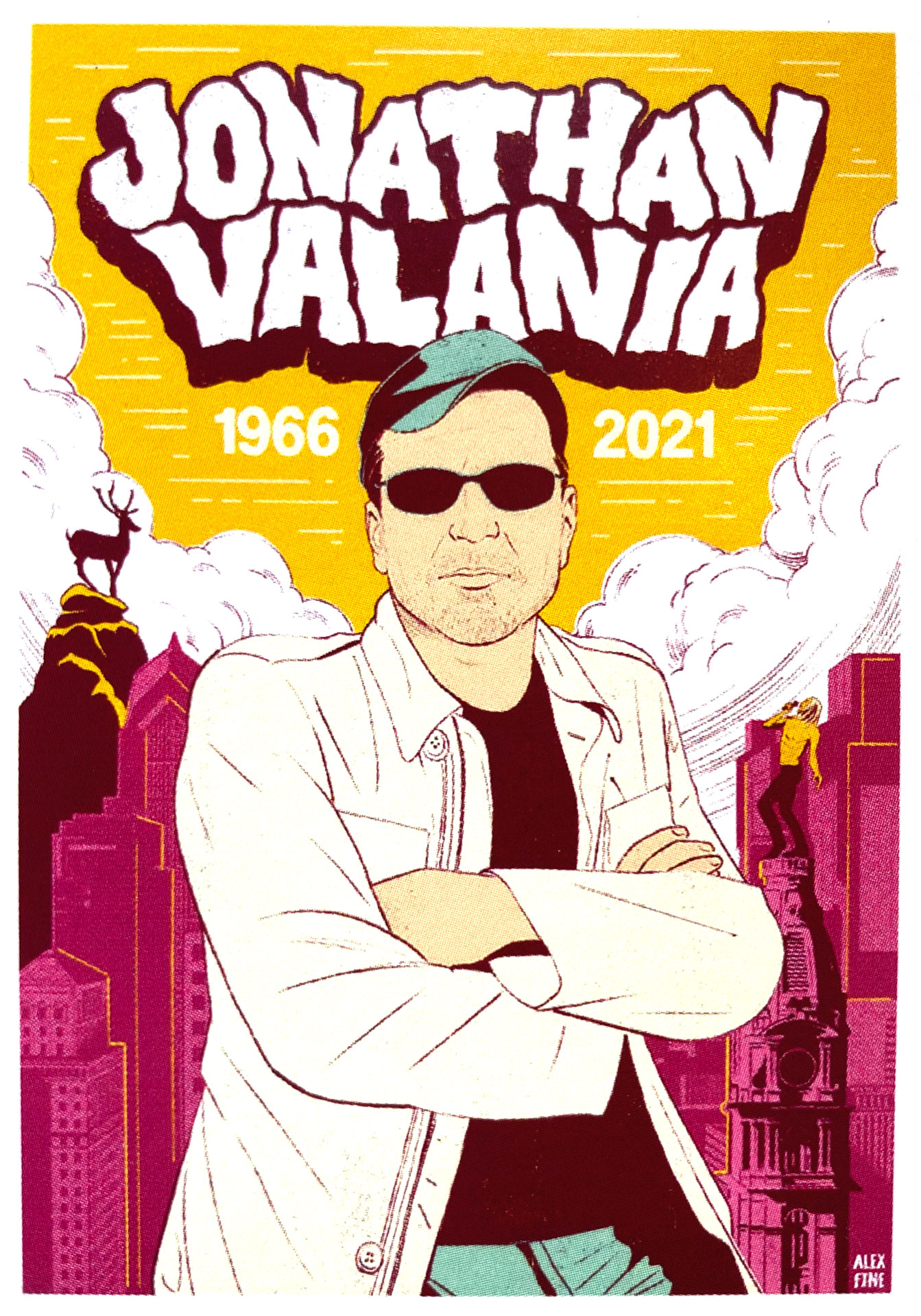
Life after 30 finds the original freak folker putting away hippy-dippy things. Meet Devendra Banhart Version 2.0: shorn, showered, shaved, engaged, focused and wearing a shirt. He’s also making the best music of his career. By Jonathan Valania

It’s the crack of noon on a frigid winter day in Greenwich Village. Devendra Banhart has risen, and with the help of a caffeine injection from Joe’s Coffee, he’s ready to shine. But first we need to stop by a bodega around the corner where they have, by Banhart’s description, the most extraordinary donuts.

He simply must have one. From there, we swing by Electric Lady Studios where Banhart will have a quick word with his pal Ric Ocasek, then it’s back to his place. He currently resides in a fairly upscale high-rise apartment building, just off Christopher Street, in the same Greenwich Village neighborhood where—as Banhart, ever the student of 20th-century bohemia, points out—E. E. Cummings once lived; Bob Dylan first met Allen Ginsberg; James Baldwin, Frank McCourt and Norman Mailer once held court at the long-gone Lion’s Head Pub; and in the early morning hours of June 28, 1969, in a down-market, Mafia-owned dive called the Stonewall, fed-up gay men rose up against perpetual police harassment and said, “No more.” Banhart’s pretty sure Stephin Merritt also lives in his building, although he’s never seen him.

He just got back from a tour of Russia. “In Moscow, all the taxi drivers can recite the work of their 10 favorite poets,” he says as we make our way to his apartment. “They’ll still kidnap you, but they are very well-read. We would play a game called Whoever Gets Kidnapped Last Wins.”

The lobby of Banhart’s apartment building has the faded, post-Czar glamour of a Russian tea room—high-ceilinged, edged in gilt and benign neglect. The thermostat must be set for the low 90s, and you smell that telltale aroma of roach spray everywhere.

A dozen or so floors up, Banhart shares a modest, two-room apartment with his fiancée, Ana Kras, a model-gorgeous photographer and high-end furniture designer from Serbia. They met two years ago when Kras came to shoot him for a magazine assignment, and Banhart proposed within five minutes of meeting her. They have been together ever since. Despite media reports to the contrary, they are not yet married, just engaged.

As she puts on her coat to run some errands, Banhart takes her face in his hands, looks deeply into her eyes and implores her to return.

“So, listen—come back when you’re done, and then we’ll walk to the studio, OK?”

“I will, I will. I’ll come back,” she says.

“I say it every time; I say, ‘Please come back,’” he says to me by way of explanation. “I’m always shocked when she does each time.”

“Each time I come back home, he just hugs me and says, ‘Thank you for coming back home,’” she says as she walks out the door. “Where would I go? So sweet.”

Read More »

Also posted in GUEST EDITOR | Leave a comment

They Might Be Giants: Leave The Kids At Home

TheyMightBeGiants

They Might Be Giants keep the parents happy with Nanobots, their second grown-up album in five years.

“Call You Mom” (download):

Audio clip: Adobe Flash Player (version 9 or above) is required to play this audio clip. Download the latest version here. You also need to have JavaScript enabled in your browser.

At 10, my daughter has essentially discarded the kiddie version of They Might Be Giants. Like most pre-teen TMBG fans, she started with 2002’s No!, the Brooklyn duo’s initial foray into children’s music. She received her copy—signed by TMBG’s two Johns, Linnell and Flansburgh—as a Christmas gift. She listened to it a few times, then set it aside.

More recently, after a chance encounter with “They’ll Need A Crane,” she abruptly decided she’d be better served by their adult catalog. With my help, she promptly went about dissecting 1988’s Lincoln and its 1990 follow-up, Flood, with the zeal of a kid running roughshod over her first PG-13 DVD.

For me, that’s meant fielding questions about “prosthetic foreheads” and seemingly benign couplets that defy the logic of basic human interaction—like, “I’m just tired and I don’t love you anymore/And there’s a restaurant we should check out … ”

“You can get a lot of distance by invoking the concept of poetic license,” says Linnell, when informed of my quandary. “Explain the concept to her. It’s a way of expressing things that don’t make sense—that are, in and of themselves, mysterious. That would be a way to dodge the question, I’d say. But I’m kind of thrilled that she’s so curious about it.”

Perhaps it’s poetic license that has seen TMBG through a voluminous series of ups, downs and holding patterns over its three decades in operation.

“We were very lucky in that we somewhat carelessly didn’t make the sort of compromises a lot bands attempted just to make a living,” says Linnell. “When we were in our 20s, we weren’t even that serious about making money. As a result, we sort of carved out this area where we were widely perceived as doing our own thing.”

Through it all, there’s been cheesy drum machines and wheezing accordions, unlikely MTV lionization, awkward attempts at becoming a real band, TV theme songs, multiplatinum sales, even a Grammy.

And, above all, there have been tunes—tons of ’em, delivered via vinyl, cassette, compact disc, download and the infamous Dial-A-Song. “We were locked in this terrible struggle with these machines that we used for Dial-A-Song,” says Linnell, explaining its unceremonious 2006 demise. (Though there’s now a cool TMBG iPhone app.) “We tried to switch over to a computer-based thing, and that was a disaster. It just miserably petered out.”

Read More »

Also posted in FREE MP3s, GUEST EDITOR | 1 Comment

Matt Pond: Southern Comfort

mattpond

Sick of snow days, a rejuvenated Matt Pond finds his legs in the Sunshine State

“Love To Get Used” (download):

Audio clip: Adobe Flash Player (version 9 or above) is required to play this audio clip. Download the latest version here. You also need to have JavaScript enabled in your browser.

It wasn’t a near-death experience, but it was enough to compel Matt Pond to hit the reset button. “I broke my leg on tour over a year ago,” says the newly emancipated, New Hampshire-bred frontguy for the ever-morphing outfit Matt Pond PA. “My drummer and I were benignly wrestling, and he put his knee right through my leg. It was in Pontiac, Mich., right across the street from an orthopedic hospital, which was good.”

Shaken by the freak occurrence and the ensuing surgery, Pond finished out the tour sitting down, then headed to St. Augustine, Fla., to convalesce with friends. Once there, he quickly took to the funky, historic northeast Florida town’s laid-back lifestyle and Southern lilt. Pond moved from Philadelphia to Brooklyn 10 years ago. And while family ties (he’s a preacher’s son) will always bring him back to the Northeast, he might just stay put for a while.

“Now I know why so many people come here; there are so many beautiful interior areas that people don’t even know about,” he says. “I’m in the best shape I’ve ever been in.”

A rejuvenated sheen permeates The Lives Inside The Lines Of Your Hands (BMG)—especially the new album’s ebullient first half, which commences with a pair of buff companion pieces, “Let Me Live” and “Love To Get Used To.” Pond partnered for a second time with producer Chris Hansen, recording in various locales, including Philadelphia, Florida, Bearsville, N.Y., and Austin.

“We couldn’t really see what it was until we started mixing it this summer,” he says. “It was just such a mess—a manic vision of going in full motion, and then being shut down.”

It isn’t so much that Pond has abandoned the autumnal, inward-delving perspective that pervaded 2010’s The Dark Leaves, or his long-established penchant for overt melancholy (see “Hole In My Heart” and “Human Beings”). But he has given both a thorough airing out with a blast of smog-free, temperate air.

“I’ve always been a sucker for lushness,” says Pond, who admits that the early, sedate stages of his recovery lent themselves to some excessive noodling. “When you’re motionless, your mind is more in motion. I couldn’t even grasp the album when it was done. Mix dysmorphia has got to be a real condition. It can be kind of confusing trying to wrangle all those tracks.”

On his ninth LP in 15 years, Pond worked with Hansen to give his folk-tinged chamber pop a more a percussive impact, and it sounds like he’s finally made a lasting peace with keyboards. The arrangements are more straightforward, even as their sonic environments are more expansive and nuanced.

The Dark Leaves was recorded in a (Bearsville) cabin,” says Pond. “This album started there, but we decided we weren’t going to settle for those claustrophobic sounds. The album started getting bigger and bigger.”

The Lives Inside sounds like a breakthrough (whatever that’s worth these days). Pond has been associated with the term before; three years ago, to be exact, when the Matt Pond PA track “Snow Day” was used for a series of Starbucks commercials.

“It’s not about coffee, but if people like it in that form, that’s fine,” he says. “People can assume all sorts of things by the choices you make. I try not to worry about it too much.”

Pond addresses the recent deletion of the “PA” from his moniker with the same healthy pragmatism. “As I moved further and further away from Pennsylvania, it seemed to make less and less sense,” he says. “I’ve played with some great people, but the band dynamic is tough—everyone gets a vote. Now, there are no limitations to what I do.”

—Hobart Rowland

Also posted in FREE MP3s, GUEST EDITOR | Leave a comment

Thao And The Get Down Stay Down: Isn’t She Lonely

Thao

Thao And The Get Down Stay Down do whatever uncommon people do

Thao Nguyen is a tireless performer. She’s been touring with her band, the Get Down Stay Down, since she graduated from college, and is used to the rigors of the road, including backhanded compliments like, “You play pretty good for a girl.” Nguyen laughs. “That only fans the flames and makes me want to play even better.”

Anyone who has ever seen her live, or listened to one of her records, knows how far off the mark that comment is. Nguyen is one of the most innovative guitarists around, with a style that blends grinding power chords, the jittery fills of a funkateer, a dash of country twang, clanging rock guitar pyrotechnics and staccato single-note runs that add a skewed melodic feel to her songs that’s halfway between bluegrass and hip hop.

“I developed my feel practicing in my bedroom,” says Nguyen. “I loved Motown, bluegrass and old country songs. Since I was playing alone, I filled the sound out with percussive rhythm playing. I started doing open mics. I wanted to present myself as a guitar player. People see I’m a girl with a guitar and they jump to conclusions about what I can or cannot do.”

Nguyen started playing solo, but after drummer Willis Thompson joined her, things took off. After hearing her 2005 debut, Like The Linen, Laura Veirs took her on tour and helped get her signed to Kill Rock Stars for 2008’s We Brave Bee Stings And All and 2009’s Know Better Learn Faster. Between tours, she moved to San Francisco and took a year off to write the songs that became We The Common (Ribbon).

Know Better was recorded at the end of a relationship,” she says. “It was introspective and self-involved. This album is a celebration of connection and community, stories of people sticking up for each other. There’s still a lot of longing, but this time I’m more hopeful. I’m not sinking into the well of loneliness.”

We The Common was recorded at Tiny Telephone Studios in San Francisco with producer John Congleton (St. Vincent, Bill Callahan, Walkmen). It features contributions from friends who add xylophone, cello, harpsichord, piano and horns to Nguyen’s inventive arrangements. “It was great to have people come in and add their input and take the songs in new directions,” she says. “I was open to any idea that served the meaning of the lyrics.”

Winning tracks include the edgy funk of “City,” the ominous seduction of “Clouds For Brains,” the slow stomp of “The Feeling Kind” (which blends tango with ’50s R&B) and the cowboy swing of “Kindness Be Conceived,” with Joanna Newsom adding harmony vocals. Nguyen’s guitar and Jason Slota’s drumming skitter in and out of the mix, adding ingenious grace notes and breaking the rhythms into unexpected meters to serve Nguyen’s unique, slightly-before-the-beat vocals.

“I didn’t try to develop a singing style,” says Nguyen. “I listen to a lot of old country music and hip hop. I like the way syllables and cadences are manipulated in both genres. If that contributed to my sound, I wasn’t conscious of it.”

—j. poet

Also posted in GUEST EDITOR | Leave a comment

The Joy Formidable: The Gaze That Slays

JoyFormidable

The Joy Formidable spikes big riffs with bigger rumination

Ritzy Bryan is lost somewhere in America. This is nothing new for the diminutive, platinum-blonde powerhouse frontwoman of the Joy Formidable, but after two years of nearly non-stop touring, it’s still a bit unsettling.

“One of those waking-up moments when you go, ‘Fuck, where are we?’” she says. “Somebody told me we’re in Richmond, Va. It’s a beautiful, bright day.”

Living in the moment—and figuring out where you are when you get there—is something of a shared philosophy between Bryan and bassist Rhydian Dafydd, one that serves them well in advance of their now just-released sophomore album, Wolf’s Law (Canvasback/Atlantic). After a much-raved-about debut, 2011’s The Big Roar, and gigs that spanned from intimate clubs to opening for Foo Fighters and Muse, expectations from fans and critics are higher than ever. There’s also the dreaded specter of the “sophomore slump” that, clichéd as it may be, still haunts any band that’s found success straight out of the gate.

Yet Bryan—who speaks passionately and from the gut, unafraid to punctuate a thought with a little blue language for emphasis—isn’t worried about expectations. Any stress leading up to the release of Wolf’s Law is an internal force, she insists, one that’s essential for her art. “The only pressure that we ever put on ourselves is to write music that we can completely stand behind,” she says. “That’s just keeping yourself alive and excited and inspired by this band.”

The Joy Formidable’s roots reach back to 2007, when childhood pals Bryan and Dafydd founded the trio in their native Wales after a few starts and stops with other projects. Something about this version clicked, led by Bryan’s hard-driving riffs, sweetly-sung pop hooks and a mesmerizing Jekyll-and-Hyde stage presence that’s part dreamy songbird, part headbanging rock madwoman. The band’s first taste of the buzz to come arrived with its first single, “Austere.” NME spotlighted the song, but it was a fan-made video—headshots of folks pleasuring themselves—that earned a YouTube ban and put the Joy Formidable on the international radar. Still, even then as a yet-unsigned artist, Bryan made it clear that the music, not the expectations, was the priority. “Some bands think the record deal is the reward at the end of it all,” she told a Welsh newspaper. “But to us, it doesn’t work like that.”

Their major-label debut, The Big Roar, delivered on the hype, earning mentions on year-end best-of lists and praise from sources as diverse as The New York Times and Mötley Crüe’s Tommy Lee. Anchored by new drummer Matt Thomas’ metal-influenced rhythms, the album and the live sets that followed showcased a wide-ranging sound: orchestral touches, well-placed double-bass patterns and ambient guitar swells. With a minor alt-rock radio hit in “Whirring” that earned them a high-energy Late Show With David Letterman performance, the members of the Joy Formidable went from relative unknowns to mid-size club headliners in just a year.

Wolf’s Law is a different animal, and a far cry from the recording of The Big Roar, which Dafydd describes as “turbulent” and “claustrophobic.” For the follow-up, after building a collection of riffs, melodies and lyrics while on the road, the trio retreated to a lakeside cabin studio in Maine to piece it all together and enjoy the silence. “When you go to that sort of environment—Portland, January, very wintery—we felt very put off from the normal chaos of touring, the normal pace of life,” says Bryan. “It gave us a lot of time for reflection. We went into those sessions feeling very hungry to get back into the studio. There was a lot of energy, a lot of focus.”

Bryan and Dafydd stripped each song to its barest bones—vocals and acoustic guitar or piano—and built up from there, with no regard for categories or labels. “That’s the beauty of music,” says Bryan. “There are no rules. There are no limitations. If you have a very clear, defined voice and you know what it is you’re trying to say, then the genre, the sounds, the instrumentation—if you’re excited by it and it fucking turns us on musically, then you can turn your hand to absolutely anything.”

The result is a sonic step forward, with more emphasis on orchestration (both Ryan and Dafydd have classical backgrounds) and dynamics. “Silent Treatment,” a staple in their live encores last year, is unadorned, with only Bryan’s voice floating about acoustic guitar, while the title track builds to a churning swell of strings and guitars that falls just on the right side of the line between grand and grandiose. That tension between the floaty and the firm is borne of the band’s songwriting process. “We all challenge each other in a good way,” says Bryan. “There’s a creative pull and push to this band. It’s not nicey-nicey and content all the time. But at the same time, we’re a tight, respectful unit. Egos don’t get in the way.”

Dafydd, who cites Jimi Hendrix as his musical spirit guide, says he’s not concerned that the violins and delicate moments throughout Wolf’s Law will alter the band’s DNA. “Guitar doesn’t make anything rock ‘n’ roll,” he says. “It’s the attitude, you know? It’s not just the sound for us, either. It’s the message.”

The album’s themes are nearly as varied as its sound, starting with the title—inspired by a 19th-century medical theory that bones strengthen with use and atrophy without. That serves as a loose metaphor for the circle of life and the healing process, subjects Bryan wrestled with recently, as her parents divorced and her grandfather passed away during recording. “The Turnaround,” an aching ballad, is dedicated to his memory. “He was without a doubt our biggest fan,” says Bryan. “There was a real sense of, ‘Fuck! He’s not going to be around to enjoy it.’”

Another intimate moment is “Tendons,” which Dafydd says is the first time he and Bryan have written about their romantic relationship. It’s no valentine, with lyrics like “We clung onto each other/There was no one else around” and “Tendons that we are/Tendons stretched too far/Tangled up and heavy”—instead, it’s an exposed nerve, a mutual entreaty to appreciate this complex passion for their music and for each other. “It’s a really bizarre but really special relationship, and I’m proud of that song,” says Dafydd. “It seems to encapsulate this extraordinary friendship we have, and now we’ll look back fondly on that song, whatever happens.”

All of the raw emotion and the snowy solitude of Maine didn’t make Wolf’s Law a downer. Another standout track is “This Ladder Is Ours,” a buoyant anthem that serves to balance some of the album’s darker themes. “It’s a song of encouragement to somebody who feels they’ve lost their lust for life and has become numb to the world,” says Bryan. “It’s a plea to them to reawaken and make use of this time that we have. There’s the sense that time is precious and the time is now.” That spirit best sums up the space the members of the Joy Formidable occupy in this moment—not worried about the curveballs life and love have thrown at them, how the next single will chart or even where they’ll wake up tomorrow.

“It goes back to that thing of just playing the shows and throwing yourself into it, and committing to it completely or don’t fucking bother, you know?” says Bryan. “We’re not going to do anything half-assed.”

—Richard Rys

Also posted in GUEST EDITOR | Leave a comment

Camper Van Beethoven: California Screaming

CamperVanBeethoven

Camper Van Beethoven celebrates its 30th anniversary by uncorking its weirdest album in decades.

“Someday Our Love Will Sell Us Out” (download):

Audio clip: Adobe Flash Player (version 9 or above) is required to play this audio clip. Download the latest version here. You also need to have JavaScript enabled in your browser.

“Should I call you professor?”

Uttered in jest, the question has been posed to one David Lowery in an attempt to get him to open up about his thriving side vocation at the University of Georgia.

“Well, sort of,” says an apparently taken-aback Lowery over the phone from Athens, Ga., after an uncomfortable few seconds of dead air. “You know, uh … getting to teach kids about the music business—especially the finance side of it, which is sort of my specialty—is pretty cool, because mostly these people don’t get good advice. Most of the stuff you read online is pretty crappy.”

The number-crunching angle certainly makes sense. When he wasn’t stirring up trouble in sundry early-’80s incarnations of Camper Van Beethoven, Lowery was studying to be a mathematician at UC Santa Cruz. And the onetime-alt-rock-fixture-turned-campus-scholar has had his share of real-life industry run-ins, coming away relatively unscathed—or at least in better shape than many major-label castoffs. “Most of the usual suspects giving young people advice don’t actually have any experience,” he says. “I feel like I’m doing a public service. The digital revolution is not a people-empowering revolution—it’s actually a corporate-empowering revolution, and kids need to think about that. The people who create the content need to be compensated fairly, whether it’s a writer, a photographer, a moviemaker or a musician.”

Nowadays, the 52-year-old Lowery is enlightening a few hundred students in “several” courses, while shuttling back and forth between Georgia and Richmond, Va., where his two sons live with his former wife. In 2010, he married Velena Vego, the talent booker for Athens’ legendary 40 Watt Club. Vego also manages CVB and its more conventional spawn and (now) co-headliner, Cracker. A year later, Lowery squeezed out a pretty respectable solo album, The Palace Guards—his first, mind you. “I did about 70 shows last year,” says Lowery, which he says is about average these days.

For a guy who’s staring at the back half of his existence, Lowery is stretched pretty thin—and, at the moment, he’s losing patience with the line of questioning: “We have the new Camper record coming out, and I don’t really have a shitload of time here, so can we talk about that and not about school?”

Read More »

Also posted in FREE MP3s, GUEST EDITOR | 1 Comment

Ra Ra Riot: You Beta, You Bet

RaRaRiot

Ra Ra Riot shifts several gears with the synth-pop dance vibe on Beta Love.

“Dance With Me” (download):

Audio clip: Adobe Flash Player (version 9 or above) is required to play this audio clip. Download the latest version here. You also need to have JavaScript enabled in your browser.

Long before Ra Ra Riot performed a single note of its dancetronic third album, Beta Love (Barsuk), the band talked at great length about the need for a change. The viscerally charged chamber-pop outfit had maintained a steady course after the tragic 2007 drowning death of beloved drummer John Pike, blossomed on its 2008 Barsuk full-length debut, The Rhumb Line, and flourished with a variety of subsequent beatkeepers, but everyone felt the inevitable tug of creative evolution after 2010 sophomore album The Orchard.

Well, almost everyone. Cellist Alexandra Lawn was perhaps less enchanted with the directions being discussed, which ultimately led to her departure early last year. Lawn’s resignation opened the floodgates for Ra Ra Riot to push its already strong new-wave roots down a new electronic path.

“After Ali left, that allowed us to change even more than we thought we were going to be able to,” says frontman Wes Miles. “The way we used to work, I or someone in the band would have a demo and we would run it through the Ra Ra Riot machine. That sort of became a burden after a while, this sort of additive, stapling onto the demo of instrumentation when all of the songs may not have benefitted from that process. We wanted to pare things back and have more space.”

The roles of violinist Rebecca Zeller and guitarist Milo Bonacci changed the most dramatically; with the dominance of the synthesizer on Beta Love, Bonacci was forced to radically reimagine/rewrite his guitar contributions and take on more expansive sonic duties, while Zeller, who wrote all previous string arrangements with Lawn, was freed up to explore new approaches with her instrument and the spare strings the band utilized.

“Becca said she was most excited about the string arrangement on ‘Dance With Me,’” says Miles. “It was just two notes. It’s so simple, but it’s something we never would have done before. Milo may have had the most interesting role for this record. He’s into tweaking stuff on a very final level, but it was more than that. He worked on what the song needed on a more whole level. That was an important step for all of us, to get to that mentality. Now, nothing is precious. We don’t have to be hamstrung by instruments. They can work without getting in the way of the melody or the song.”

While Ra Ra Riot continues to be guided by many of the new-wave influences that informed its first two albums and a handful of EPs, Miles notes that Beta Love evolved from a variety of fresh new sources.

“You always find new things in music that you like, and not just new music, but things you hadn’t heard in the same way before,” he says. “There’s a lot of science fiction from books I had just read. I got into William Gibson in the middle of thinking about this record, and (bassist) Mat (Santos) and I really got into Ray Kurzweil as a scientist and conceptualist, and that influenced the lyrics as well as the music. We took more electronic sounds that may have been inspired from Devo or Kraftwerk. In the past, that stuff was a drone and didn’t really do much.”

—Brian Baker

Also posted in FREE MP3s, GUEST EDITOR | Leave a comment

Kelly Hogan: Sing ’Em If You Got ’Em

Kelly Hogan gets hurt with a little help from her friends

“Plant White Roses” (download):

Audio clip: Adobe Flash Player (version 9 or above) is required to play this audio clip. Download the latest version here. You also need to have JavaScript enabled in your browser.

Neko Case has called her pal Kelly Hogan “the Zelig of rock ‘n’ roll.” Her name appears in the credits for albums by Mavis Staples, the Mekons, Will Oldham, Matt Pond PA, Amy Ray, Giant Sand, Archer Prewitt, Alejandro Escovedo, Drive-By Truckers, Jakob Dylan, Tortoise and many others, Case included.

“I’m a slut, all right,” cracks Hogan. “I get around.”

Read More »

Also posted in FREE MP3s, GUEST EDITOR | Leave a comment

Little Hurricane: Wrecks And Effects

Dirty blues and frayed nerves make Little Hurricane churn

“Fourth Of July” (download):

Audio clip: Adobe Flash Player (version 9 or above) is required to play this audio clip. Download the latest version here. You also need to have JavaScript enabled in your browser.

Forgive the members of blues-rock duo Little Hurricane if they describe the past year as a whirlwind. Since their first practice in drummer Celeste “C.C.” Spina’s apartment in late 2009, they’ve gone from playing for crowds they could add up on one hand to earning the title of San Diego’s best new band and landing coveted spots at South By Southwest, Austin City Limits and Lollapalooza. Despite the fuss they’ve kicked up with their live shows and debut album, Homewrecker (Unknown Breakthrough), success hasn’t translated into overconfidence.

“I almost had a heart attack the morning of Lollapalooza,” says Spina, a Chicago native. “I was up at 4 a.m., at my parents’ house, pacing, thinking, ‘What if this ends our career?’ I was just terrified.”

When Spina turned to Craigslist in search of a bandmate a few years ago, her expectations were fairly low. The culinary-school grad had spent nearly a decade hopping from kitchen to kitchen in pursuit of her dream to open a restaurant—and afford a house that could accommodate her drum kit. After moving to San Diego and continuing to disturb her neighbors with paradiddles, she realized music was her true passion. That revelation led to Spina’s online post, resulting mostly in responses from “creepy dudes or people like, ‘I can play with a chick.’”

She eventually agreed to meet with guitarist/singer Tony “Tone” Catalano and was impressed by his jazz-band chops and soulful vibe. “When Tone came over for that very first practice, and he had this amplifier in a ratty old suitcase that looked like you’d find it at the swap meet for five dollars, my eyes just lit up,” says Spina. “I love old stuff. Even if you don’t know the history, you just feel it.” Considering they met online, she also appreciated his non-threatening demeanor. “I analyzed him and decided he probably wouldn’t murder me,” she says.

As it turned out, the duo who’d become Little Hurricane were like two lost pieces of the same puzzle, waiting to be put together. Catalano was the industry veteran who was feeling burned out after years playing in the pop-punk outfit he formed in high school, and later, recording other artists and live shows for the Grammys and MTV. That Spina hadn’t played with other musicians since her marching-band days was actually a bonus in his eyes. “She had a fresh energy,” says Catalano. “There’s a lot of jaded musicians out there. She made it exciting for me again.”

Little Hurricane’s drum-and-guitar setup recalls both the White Stripes and Black Keys, comparisons that Spina takes as compliments, for the most part. “I really like both of those bands,” she says. “Although the other night someone said I drummed a lot like Meg White, and I vowed to myself to practice a lot before the next tour.” One listen to Homewrecker and it’s clear that most of those parallels end with a head count. Spina’s drumming swings from subtle to sledgehammer-heavy, complemented by Catalano’s nimble guitar work and voice, which shifts from whisper to wail in an eyeblink. “We really like that ‘dirty blues’ term,” Spina says of their sound. “But it’s also folky. There’s some rock elements to it. Other stuff is really dark, really sad. I think its music that plays on people’s emotions, including our own.”

Anyone expecting a sunny postcard from California will be disappointed in the menacing stomp of “Crocodile Tears” and “Haunted Heart,” with its slinky groove and lyrics of aching love from beyond the grave. “A lot of the songs are experiences in our lives,” Catalano says, pointing to “Sweet Pea,” inspired by the passing of Spina’s grandmother, and “Lies,” an explosive howl aimed his ex-girlfriend. “It worked out as a song,” he says, “and a way to get out some aggression.”

That energy carries over to the stage, where the photogenic pair is hard to ignore. Spina, who’s dabbled in modeling, is a study in contrasts, both girly (she often wears baby-doll dresses onstage and plays barefoot, with her cowboy boots stationed by her kick drum) and badass (as evidenced by the colorful half-sleeve tattoo wrapped around her left arm). Lean and handsome, Catalano’s soft-spoken persona disappears when the amps are turned on, and their live sets are a chemistry lesson set to music—whether exchanging quick glances or locking eyes, there’s rarely a moment of disconnect. That electricity leads to the inevitable questions about whether they’re more than bandmates.

“We get that a lot,” says Catalano. “I think some people wish we were together. It just makes sense in their heads. But we both have love for the music.” As for all the eye contact, Spina chalks it up to her own awkwardness: “I don’t know who else to look at. I get really uncomfortable looking at the crowd.”
In their short time together, Spina and Catalano have embraced a road-dog mentality, playing gigs across the West Coast and an unofficial residency at the swanky Cosmopolitan casino in Las Vegas, where high-rolling bros and high-heeled babes in wrap dresses are known to roam. Given the band’s glitter-free sound, it’s no surprise that one of Catalano’s favorite gigs was far less glamorous—a joint called Divebar in a strip mall near the Vegas airport, for an audience of three.

“We were obviously disappointed, but we had to impress those three people,” he says. “We go up to the bar and ask for a beer, and the bartender said, ‘The band doesn’t get a beer until after they play.’ They’d had bands that just drank their beer and left. We thought, ‘What kind of place is this?’” Their efforts paid off after the show, when a patron asked them to record a song for his film, an indie crime comedy starring Coolio. That led to “Crocodile Tears,” one of Homewrecker’s standout tracks. “It’s one of our favorite songs to play,” Catalano says. “It’s just funny how the universe works out.”

The band hopes its good karma flows through this fall for Little Hurricane’s first Northeast tour and a two-week sprint through Australia. Though they’re playing to bigger crowds these days and mixing in some surprising covers—ranging from Sinatra’s “Feeling Good” to Aerosmith’s “I Don’t Want To Miss A Thing”—one constant is their living-room stage set. Inspired by their cozy first rehearsal, they always perform with a dresser that doubles as an amp cabinet, topped off with an antique lamp.

“I can tell some bands think it’s just bells and whistles, but I think of it as detail,” Spina says of their accoutrements, which also decorate their album cover. “We’re trying to figure out how to get it to Australia right now. They’re like, ‘Do you really need to bring a dresser and a lamp?’ We do. But the lamp is on its last legs.”

With mounting accolades, the current tour and enough new material for their sophomore release, which they’re targeting for early next year, Spina can laugh at her mini-breakdown on the morning of Lollapalooza. “It started raining, but the clouds parted and it was a beautiful day,” she says. “We had a terrific set, so it all worked out. But it was kinda scary, to be honest.”

Yet there’s no trace of fear when talk turns to the future, as Spina says their high-profile shows have only made them hungrier. “You get a taste of the big thing,” she says. “Then it’s back to reality and you realize you have to work 10 times harder to get where you want to be.”

—Richard Rys

Also posted in FREE MP3s, GUEST EDITOR | Leave a comment

Clinic: Blame It On The Reign

Surviving the music industry isn’t brain surgery, but Clinic thinks it soon will be.

“Piracy is so old-fashioned,” chirps the salesman in the machine, amiably interrupting my full-body scan of Clinic’s discography. I didn’t pay a cent for any of the half-dozen albums, or the battery of supplemental EPs and outtakes—but the invisible interloper hasn’t descended upon my listening experience to chide me. In fact, I feel as though I’m being congratulated.

“Every single track you listen to on Spotify makes money for the rights holders and the artists. Without them, there’s no music for us to enjoy!” The five-note piano theme and muzak acoustic return reassuringly to the tonic, stabilizing like the entire music industry in the none too distant future of Spotify’s prophecy, and Clinic is back in my ears, effortlessly earning its mechanical royalties. Everybody wins.

It’s a nice thought—especially given the convenience. The Sweden-based streaming service has become a household name in recent years thanks to its insatiable approach to label catalogs major and indie, from last week’s One Direction ballad to everything Duke Ellington recorded in 1926. For five bucks a month, I could gain entrée to this veritable all-you-can-eat without the occasional piracy PSA; for five more, I could even enjoy the feast from my phone. But like the majority of Spotify’s 15 million active users, I opt to stomach the adverts every couple of albums and leave it at that.

By the time Clinic put out its previous record, 2010’s particularly pop-minded Bubblegum, Spotify had already conquered the Liverpool four-piece’s native Britain, and much of the surrounding territories. While promoting that record, frontman Ade Blackburn occasionally mentioned how nobody in the band had yet seen a paycheck from the growing digital empire that had recently laid claim to its music.

Since then, plenty has changed: Spotify has finally cracked the hugely scalable American market, and Clinic has logged another two years of labor limae to make Free Reign (Domino), its seventh album, and the most focused and singular of the band’s career to date. But when I ask Blackburn what’s up on the monetary tip, he sounds weary and wary both.

Read More »

Also posted in GUEST EDITOR | 1 Comment

Aesop Rock: Positive Reinforcement

Skelethon is Aesop Rock’s key to navigating the post-millennial abyss

“Zero Dark Thirty” (download):

Audio clip: Adobe Flash Player (version 9 or above) is required to play this audio clip. Download the latest version here. You also need to have JavaScript enabled in your browser.

San Francisco-via-NYC hip-hop artist Aesop Rock raps from the edge of an abyss. On 2000’s quasi-apocalyptic Float and his now-classic trio of albums for mighty indie hip-hop label Definitive Jux (2001’s Labor Days, 2003’s Bazooka Tooth and 2007’s None Shall Pass), Aesop told grim stories of dehumanizing labor, the pitfalls of rabid consumerism, self-annihilation through media addiction and the quickening decline of a human society driven by insatiable greed and hell-bent on its own destruction. His perspective was bleak, but with erudite wordplay, critical insight and labyrinthine layers of esoteric meaning, Aesop sounded more like an enlightened (and humble) visionary than a crabby, defeated naysayer.

He also never gripped the mic to brag about knowing the solutions to the world’s endless ills. Aesop’s mission was more about documenting troubling things as he saw them, not prescribing cures like some finger-pointing pundit on Democracy Now! or Fox News. He jotted down patterns in his notebooks and constructed sonic maps to assist curious listeners who, like him, found themselves navigating dystopic tunnels with no flashlight. He never positioned himself as anything more than a perplexed dude attempting to find out why people do what they do and why the world is the way it is.

“My music’s sometimes social commentary, but I never deliver that commentary from atop a soapbox,” says Aesop. “I’m just a person who tries to make it through life one day at a time. I don’t have the answers. I’m just always walking around, finding my environment to be way too much to handle. I fish through it to try to figure it out, while remaining realistic and open to the fact that things aren’t always good. And, then I write a song when I have an urgent idea that must come out. Music has always been my release.”

Following a five-year hiatus, Aesop recently returned with his first solo album since None Shall Pass; released by the Rhymesayers label, Skelethon is the rapper’s effort to come to terms with the death of a close friend, as well as the deterioration of several friendships and close relationships.

“Death has become commonplace in my life,” he says. “The past few years was an endless period of skeletons. But, hopefully, Skelethon will help put all of this behind me. It’s like a giant purging—like finishing a chapter and preparing to jump into the next one.”

In this sense, Aesop’s a lot like Lucy, the heroine from his song “No Regrets,” from Labor Days. While the world crumbles around her and everyone’s occupied with meaningless negativity, Lucy ceaselessly pursues her passion for painting. Like Lucy, creativity is how Aesop makes sense of the world and maintains his sanity.

“Throwing myself completely into my work is the only answer for me,” he says. “I like to hide out and make music. It’s the only silver lining. It’s like therapy—you go in and talk for an hour, and though nothing has really changed, you feel better because you get all those thoughts out. If I wake up in the morning and know I made a song from scratch the day before, then I’m happy.”

Elliott Sharp

Also posted in FREE MP3s, GUEST EDITOR | Leave a comment

Corin Tucker Band: Dance The Blues Away

The last time the Corin Tucker Band played in MAGNET’s hometown, its frontwoman and namesake realized it was time for a change to reclaim its voice.

“Groundhog Day” (download):

Audio clip: Adobe Flash Player (version 9 or above) is required to play this audio clip. Download the latest version here. You also need to have JavaScript enabled in your browser.

“We had a show in Philadelphia,” says Corin Tucker. “I distinctly remember this one guy—God bless him, he was drinking out of a paper bag the entire show. He was so completely ready to dance, right through the quietest acoustic songs. I thought, ‘Man, it just seems like people really want to be moving around, so maybe we should make a record that’s a bit dancier.’”

The first Corin Tucker Band album, 2010’s 1,000 Years, was dominated by moody, thoughtful songcraft—quite a left-turn coming after Tucker’s last album (to date) with groundbreaking trio Sleater-Kinney, 2005’s furiously distortion-heavy The Woods. But now, 1,000 Years’ follow-up, Kill My Blues (Kill Rock Stars), is another sonic shift. The rhythms are more hip-shaking, it’s true. “I definitely never spent so much time playing a disco beat,” laughs drummer Sara Lund, formerly of Unwound. Tucker says the band was influenced by “the entire 1980s. I was a teenager then, and that music was just emblazoned on my brain.” She also cites the likes of “early Roxy Music or even some of the Patti Smith stuff, all that great guitar stuff that still has a good danciness to it.”

But in addition, on Kill My Blues, the guitars are louder, the textures more extreme. Her Sleater-Kinney bandmates, Carrie Brownstein and Janet Weiss, have garnered plenty of media attention with their projects together (Wild Flag) and separately (Brownstein on Portlandia, Weiss in Stephen Malkmus And The Jicks). Kill My Blues serves as a timely reminder of Tucker’s inimitability.

Read More »

Also posted in FREE MP3s, GUEST EDITOR | 2 Comments

The Green Pajamas: Something A Little More Comfortable

Versatile Seattle veterans Green Pajamas were never much into flannel.

“The Queen Bee Is Dead” (download):

Audio clip: Adobe Flash Player (version 9 or above) is required to play this audio clip. Download the latest version here. You also need to have JavaScript enabled in your browser.

“All over Seattle, fans are twisting and squirming in uncontrollable spasms to the sounds of the Green Pajamas! They’re like Gilbert and Sullivan on drugs!” So went a hyperbolic 1984 radio spot created by the permanent core of the band, Jeff Kelly and Joe Ross, for the Green Pajamas’ debut album, Summer Of Lust. Of course, none of it was true.

“We made Summer Of Lust as a cassette—25 copies, I think—and put ’em in some University District record stores,” says Kelly. The “twisting and squirming” wasn’t due for another five years, when grunge would hijack the airwaves. Gilbert and Sullivan would be left to Rufus Wainwright and Antony & The Johnsons, more than a decade later.

Like its Southern California influences in the Paisley Underground (Rain Parade, Three O’Clock), named as an homage to the psychedelic heyday of Jefferson Airplane and Strawberry Alarm Clock, the Green Pajamas must hold the world’s record for most albums (somewhere around 30) recorded by a band with the fewest number of live appearances (somewhere more than 30) over a career that has spanned almost 30 years.

“Even though he has a really good time when he gets there, it’s very hard to get Jeff to play live,” says Pajamas alternate vocalist Laura Weller. The home Kelly shares with his wife Susanne and their two daughters is filled with books, art and classical music. “He should have been a professor of Gothic literature,” says Weller.

Read More »

Also posted in FREE MP3s, GUEST EDITOR | 1 Comment

Dan Deacon: America The Electronic

Dan Deacon reconciles the grit and grandeur of the United States on America.

“Lots” (download):

Audio clip: Adobe Flash Player (version 9 or above) is required to play this audio clip. Download the latest version here. You also need to have JavaScript enabled in your browser.

Long before electronic wizard Dan Deacon released his commercial debut, 2007’s Spiderman Of The Rings, he’d gigged with a high-school ska band, earned a computer-music-composition degree from SUNY at Purchase, blew tuba for Langhorne Slim, shredded improv grindcore guitar with Rated R, started a chamber ensemble, co-founded Baltimore’s Wham City arts/music collective and released a series of experimental computer-music/sine-wave recordings. Most people find that breadth of experience jaw-dropping, but Deacon explains it casually.

“The ska/grindcore/Langhorne Slim stuff was the seeds of me entering the musical world,” he says. “Ska instilled in me that it was OK to have fun making music. I grew up on Long Island, where hardcore and punk reigned supreme, and it was serious and macho, and ska was not that.”

Deacon continues to pursue an eclectic musical course—his Carnegie Hall debut in March was part of a John Cage tribute—but his greatest successes have been in the electronic/dance scene. America (Domino), Deacon’s new album and the follow-up to 2009’s highly regarded Bromst, could cement his status as one of the country’s most adventurous and inspired electronic architects.

“Obviously, the music is polarizing,” says Deacon. “This isn’t the most mainstream-focused music you can find today, so naturally it’s going to resonate with people differently. I didn’t want to repeat Bromst. I liked working with those long-form pieces, but I wanted to write pop songs again. I wanted them to be cohesive, but I didn’t want them to sound like the same instruments. That’s what’s most fun about electronic music; every song can exist in its own timbrel universe and be drastically different.”

Read More »

Also posted in FREE MP3s, GUEST EDITOR | Leave a comment

Beachwood Sparks: Bonfire Escape

Beachwood Sparks finally thaw out, embrace the future with new music

“Forget The Song” (download):

Audio clip: Adobe Flash Player (version 9 or above) is required to play this audio clip. Download the latest version here. You also need to have JavaScript enabled in your browser.

They burned brightly, but briefly. Now, they have rekindled the flame. For Beachwood Sparks, the metaphor is all too easy and all too apt.

Beachwood Sparks’ discography is succinct: 2000’s self-titled debut and 2001’s Once We Were Trees, plus an EP and a few singles, most released on Sub Pop. There wasn’t much, but there was something indelible about those records. They took the cosmic American music of the Flying Burrito Brothers and Byrds, added the bittersweet sounds of middle-period Beach Boys and Sister Lovers Big Star, then turned them into a sun-dappled, dreamy, psychedelic brand of alt-country.

“There wasn’t a ton of recorded stuff, but I think with the feel of it and the concerts that we did, there was a real vibe that we generated,” says Farmer Dave Scher.

In its brief lifetime, the band became a touchstone in the alt-country landscape, and its last major tour found the band opening for the Black Crowes. But after 2002’s Make The Cowboy Robots Cry EP, Beachwood had run its course, and the group disbanded amicably, five years after it formed.

“It was an organic process; nobody was ever served any papers and no one made any declarations of finality,” says Scher. “I think you’d liken it to a hibernation. I think maybe we just said, ‘Let’s sit the Bush years out.’”

“When I think about it, it didn’t seem super short, but now, 10 years later, it does,” says Chris Gunst.

Guitarists Gunst and Scher formed the band in Los Angeles in 1997 with bassist Brent Rademaker. They had a rotating cast of drummers, with Aaron Sperske the longest-tenured, and that’s the quartet behind The Tarnished Gold, the new Beachwood Sparks album.

Read More »

Also posted in FREE MP3s, GUEST EDITOR | Leave a comment

Amanda Palmer: Life’s Grand

Amanda Palmer launches a full-frontal assault on rock-star mystique

“Do It With A Rockstar” (download):

Audio clip: Adobe Flash Player (version 9 or above) is required to play this audio clip. Download the latest version here. You also need to have JavaScript enabled in your browser.

When Amanda Palmer has something on her mind, she doesn’t hold back.

She fills her blog with grand ideas, tweets her fleeting thoughts to 585,000 followers and, in the full-frontal video for “Want It Back,” wears her lyrics on her flesh. When she wanted to be free from Roadrunner Records, she sang “Please Drop Me” to the tune of “Moon River.” Rather than muse in private on her place in the pop pantheon, she did it in a ditty, “Gaga Palmer Madonna,” that she posted direct to YouTube. And after she raised nearly $1.2 million on Kickstarter for her new album, she used her blog to account for the money, then addressed rumors that she planned to donate the funds to the Church of Scientology by scrawling a denial on her naked torso.

But though you’ll get a peek at her plugged-in worldview on “Smile (Pictures Or It Didn’t Happen)” and other tracks from Theatre Is Evil, Palmer seems reluctant to elaborate, letting the songs speak for themselves. These days, she’s spending more time discussing her modus operandi than her music.

“I’m happy to be known for my business acumen,” she says, “but I would so much rather be known as a good performer and songwriter who happens to be clever when it comes to putting her music out.”

Read More »

Also posted in FREE MP3s, GUEST EDITOR | Leave a comment

Shoes: Post-Teenage Kicks

Power-pop progenitors? O.G. DIYers? The last college-rock survivors? No label adequately captures the four-decade journey of Zion, Ill.’s Shoes, who are releasing their first new studio material in 17 years. 

“Say It Like You Mean It” (download):

Audio clip: Adobe Flash Player (version 9 or above) is required to play this audio clip. Download the latest version here. You also need to have JavaScript enabled in your browser.

Shoes singer/guitarist Jeff Murphy is doing his best impression of the Hedleys, the “hardest working West Indian family” from In Living Color who seemed to take a perverse delight in toting up the sheer number of jobs it was possible to hold down at any given time. When he’s not playing with his band of nearly 40 years, he also has a day gig (fixing electronic gear at a local music store) or is engaged in the kind of activity he’s preparing for today: putting in a guest teaching appearance at Harper College in nearby Palatine, Ill., to help out a professor friend.

“I’m a bit harried because I’m speaking at a Beatles class,” relates Murphy with no small degree of enthusiasm. “We’re gonna try ‘You Can’t Do That.’ I like to try to involve the students as much as possible, so I’m bringing along a cowbell and a tambourine to pluck a couple of them out of their seats to come up and play along. The prof for the class is Greg Herriges. He’s a writer friend of mine who also did a documentary called Player: A Rock And Roll Dream. And I’ve taught in his class for three or four years now. We did ‘Two Of Us’ last year. I really don’t want it to be about me trying to show off in front of a class full of college kids. Greg talked me into it,” Murphy finishes in what is his—and his band’s—typically self-deprecating fashion. “But I love doing these kind of speaking things, and to be able to talk about the Beatles is a double-plus.”

Embodied in this guest-teaching vignette is literally everything you need to know about Shoes: the single-minded pursuit of perfection, the enthusiasm that only fans can bring to a volunteer endeavor, the desire to support friends who are equally committed to their art or avocation, the self-skewering sense of humor. Not to mention the “Midwest nice” demeanor that colors every conversation with the band on virtually every topic, any time.

Perhaps the most astonishing thing about Shoes is that this ethic and attitude prevails despite a collection of music-biz bumps and bruises that could rival Charlie Brown in terms of sheer career futility. In some ways, they’re the Forrest Gumps of rock. Shoes essentially presaged punk’s DIY movement by recording its first, early-’70s albums in Murphy’s living room before garnering enough critical acclaim to merit a major-label contract; recorded three terrific if underappreciated power-pop albums on Elektra before being unceremoniously dumped in the mid-’80s; had the presence of mind to take their separation pay from the label and parlay it into a proper commercial studio (Short Order Recorder) and record label operation (Black Vinyl Records), thus affording Shoes not only cheap access to studio time and readymade record distribution, but also the ability to produce other up-and-coming bands along the way. (Oh, hello, Material Issue and Local H.) That business venture was then shuttered in the mid-2000s and the band members moved their recording equipment back into the basement, so to speak, bringing them full circle in a career that has seen a little of everything the music business has to offer except for one elusive prize: mainstream success.

Read More »

Also posted in FREE MP3s, GUEST EDITOR | 1 Comment

Redd Kross: Healthy Choice

Ever out of step with the cool kids, Redd Kross is finally ready for its close-up.

“Researching The Blues” (download):

Audio clip: Adobe Flash Player (version 9 or above) is required to play this audio clip. Download the latest version here. You also need to have JavaScript enabled in your browser.

“We are a weirdo band. We never really fit into any one thing. We’ve kind of been alongside—might have been adjacent to—certain movements, but never been in the middle of any particular movements. The second you could say we were a part of something, we then rejected it and did something totally different. We’ve never really been able to benefit.”

Steve McDonald, bass player and founder of legendary L.A. rock ‘n’ roll band Redd Kross, is on the phone, and MAGNET might be having a little trouble controlling our excitement. For starters, Redd Kross is releasing its first album in 15 years, which we honestly didn’t think was going to happen. Secondly, Researching The Blues is as close to our Platonic ideal of what a Redd Kross record (what a rock ‘n’ roll record) should sound like: punk rock fury mixed with power-pop hooks and tinged with a fringe of psychedelia. Researching embodies the best of what the band has done since it started out 34 years ago (during the first wave of L.A. punk) and continued throughout the ’80s and ’90s while taking perpendicular approaches to the prevailing trends of the era. Redd Kross has been our spirit guide for many a year, and MAGNET is more than a little stoked to be led out of the wilderness.

“I don’t think Redd Kross has ever taken on that kind of cause,” says McDonald. “I think we’ve always been our own weirdo Island of Misfit Toys.”

Read More »

Also posted in FREE MP3s, GUEST EDITOR | Leave a comment

The Old Ceremony: Second Wind

The Old Ceremony greets a new audience with Fairytales And Other Forms Of Suicide

“Fairytales And Other Forms Of Suicide” (download):

Audio clip: Adobe Flash Player (version 9 or above) is required to play this audio clip. Download the latest version here. You also need to have JavaScript enabled in your browser.

When Django Haskins picks up the phone, it’s less than 48 hours after his return to North Carolina from Europe. He’d been across the pond to play two shows, in London and Barcelona, as a member of Big Star Third, an all-star revue performing Big Star’s Sister Lovers. For Haskins, it was an opportunity to stand among heroes: Jody Stephens (Big Star), Chris Stamey (dB’s), Mike Mills (R.E.M.)—and on this trip, Robyn Hitchcock and Ray Davies, too.

“It just blows my mind to have that kind of opportunity,” he says, shaking off the jet lag.

He won’t have much time to reflect, though. The Old Ceremony, the orchestral-pop quintet Haskins has led since 2004, releases its fifth album, Fairy Tales And Other Forms Of Suicide, this month. The band’s first LP for Yep Roc is also its first to receive a vinyl pressing, as well as its first to be released in Europe. In other words, it’s the perfect time for a provocative album title.

“The decision came because it just seems to really express the overarching theme of a lot of the songs of the record,” says Haskins, “which is trying to really see things as they are, rather then the way that you’d like them to be, or the way that sometimes these idealized versions of things get in the way of that. The band has obviously been around for a while, but to a lot of people, this will really be the first thing they hear about us, and I like kind of coming in swinging a little bit.”

If the title swings, the music lands the blow. Eclectic as ever, the Old Ceremony spends Fairytales’ 10 songs resurrecting the Waits/Cohen “pop-noir” of its earliest recordings (“Star By Star”), toe-dipping in funk (“Middle Child”) and otherwise concocting a sophisticated synthesis of intimate folk, dramatic pop and rootsy power pop. Aside from its guitar/bass/drums (played by Haskins, Jeff Crawford and Daniel Hall, respectively) setup, Mark Simonsen’s vibraphones and Gabriele Pelli’s violin add a stately glow and atmospheric shading to the Old Ceremony’s music.

“Certain bands kind of have a sound, and that’s their sound,” says Haskins. “For us it’s definitely been an evolution. There’s an aesthetic and maybe kind of an atmosphere to our songs that is pretty consistent … it’s a little more abstract than a specific sort of sound, but that’s what ties together what is otherwise a pretty eclectic writing style.”

It also makes them a perfect fit for Yep Roc’s roster, where the Old Ceremony stands alongside rock ‘n’ roll grown-ups like the aforementioned Hitchcock, Sloan, Chuck Prophet, Nick Lowe, John Doe and Paul Weller. When I mention this to Haskins, he laughs. “Right,” he says. “Grown-ass men.”

There’s something to that, though. Like many of the reinvented and rejuvenated performers the band now calls labelmates, the Old Ceremony makes music unencumbered by the ever-shifting demands of new and now. And it does so without forgetting rock’s primal energy. There’s a catharsis, Haskins says, in playing a guitar solo “that sounds like it was damaged in a fire.”

—Bryan C. Reed

Also posted in FREE MP3s, GUEST EDITOR | 1 Comment

The Cribs: And Then There Were Three … Again

The Cribs bid adieu to Johnny Marr and get back to the streamlined punk of their early days, coupled with an evolving pop complexity

“Come On, Be A No-One” (download):

Audio clip: Adobe Flash Player (version 9 or above) is required to play this audio clip. Download the latest version here. You also need to have JavaScript enabled in your browser.

The common reaction to the Cribs’ new album, In The Belly Of The Brazen Bull (Wichita), the follow-up to 2009’s enormously successful Ignore The Ignorant, has generally been to tag it as a return to the vigorous punk tone of the band’s earliest work. Gary Jarman understands the perspective from which that opinion is derived, but he’s quick to sharpen any fuzzy logic surrounding it.

“In some ways, I take it as a compliment; in other ways I find it a bit weird,” says Jarman from his home in Portland, Ore. “We had a year off last year, and we reverted to being a three-piece, so it almost feels like the first record again. So, in some ways, I understand that. But the songs are certainly less simple than the early stuff, and it’s a progression on the last record.”

Read More »

Also posted in FREE MP3s, GUEST EDITOR | Leave a comment

Rhett Miller: The Seeker

Between the tee-ball games, backyard barbecues and Silly String wars, Old 97’s frontman Rhett Miller can’t staunch the yearning. By Hobart Rowland

“Out Of Love” (download):

Audio clip: Adobe Flash Player (version 9 or above) is required to play this audio clip. Download the latest version here. You also need to have JavaScript enabled in your browser.

Rhett Miller misses his glasses.

“I’m always reaching up to the bridge of my nose with my index finger as if there’s something to be pushed,” he laughs. “Getting rid of them was more of a logistical thing—they kept flying off my face onstage.”

It was during a mercifully brief Buddy Holly eyewear phase in 1997 that Miller equated country music to Pennsylvania’s great mystery meat. “I’m sure that, during my youth, I uttered the phrase, ‘I dislike everything country,’” he remembers. “It’s like the artistic version of scrapple up north.”

At the time, Miller and the rest of the Old 97’s were caught up in a well-orchestrated media blitz surrounding the release of Too Far To Care. It was the band’s first album for Elektra, and it remains the catchiest and most compelling distillation of its cow-punk-meets-Brit-Invasion template. All of 26 and still living in his home city of Dallas, Miller was basking in the glow of 10 years of hard work honing his songwriting chops, that plaintive vocal style and his boyish, eager-to-please front-guy persona. But he was also beginning to chafe at the strictures of the group’s alt-country designation.

“I was making everybody so happy being this country bumpkin,” says Miller now. “There were so many rules to alt-country. I didn’t get into music to follow anybody’s rules.”

Miller can’t recollect how much mileage he got out of the scrapple quote, but he’s sure he must have said it again at some point. “I usually repeat myself all the time and figure people will think I’m consistent—that it might reinforce the idea that I’m telling the truth,” he says with a shrug.

It’s a balmy day in New Paltz, a crunchy college town near the house he shares in New York’s Hudson Valley with his model-turned-homemaker wife, Erica, and their two kids. Outside beckons, and the conversation shifts from a busy downtown café to a gazebo at a local park near the hilly SUNY New Paltz campus.

Read More »

Also posted in FREE MP3s, GUEST EDITOR | Leave a comment

Ryan Monroe: Feeling Swell

Band Of Horses’ Ryan Monroe digs that (partly) sunny SoCal vibe.

“The Darkness Will Be Gone” (download):

Audio clip: Adobe Flash Player (version 9 or above) is required to play this audio clip. Download the latest version here. You also need to have JavaScript enabled in your browser.

Ryan Monroe hadn’t considered himself a control freak by nature. Then he found himself at Redstar Recording in Silver Lake, Calif., with its myriad instruments scattered around, just begging to be fiddled with. For a guy who can play just about anything, it was impossible to resist.

“The second floor is nothing but a bunch of vibraphones and crazy pianos and organs,” says Monroe. “And the bottom floor is a studio with a bunch of the coolest shit you could ever imagine.”

Monroe was taking a breather from his continuing role as the 34-year-old bastion of versatility in Band Of Horses to record A Painting Of A Painting On Fire (RCM). Once he saw the mother lode at Redstar, he had just one request for producer Chris Testa, a multiple Grammy winner for his work on the Dixie Chicks’ Taking The Long Way. “I explained to him that I wanted to play everything on the record,” he says.

Monroe got his wish—and then some: Some of the tunes originally had more than 120 different tracks. “It turned into subtraction more than addition; Chris has a super grasp on arrangements and stuff,” says Monroe, who worked with Testa to purge and consolidate upward of 100 demos. “He really sat down and gave the songs a good haircut.”

Not that a rash notion or two doesn’t occasionally surface on the album’s 11 tunes, accounting for titles like “Doritoys” and “Any Way, Shape Or Deformity.”

“All lot of these songs I wrote in a pretty crazy state of mind,” Monroe admits. “I’d drink, drink, drink, wake up, then press play and go, ‘Oh, that’s cool.’”

In its finished form, A Painting is a thoughtful, impressively executed, alternately goofy and sinister song cycle. Any of its more excessive tendencies are largely tempered by a toasty, soulful Southern California glow. At times, it’s uncanny how much Monroe sounds like Joe Walsh—pickled disposition and all—in his ’70s-era prime. And Monroe couldn’t be happier with such comparisons.

“Driving into the studio every day, the local radio station was always playing Bob Seger,” says Monroe, a South Carolina native who now lives with his girlfriend in Boston. “But Joe Walsh—man, bring it on. I also love all that Laurel Canyon stuff.”

Monroe hopes to tour this summer behind A Painting before things get too busy with Band Of Horses, which is finishing its fourth album with producer Glyn Johns and eyeing a September release. “I’m trying to put together some shows,” he says. “Otherwise, like my dad says, I’ll be sitting around eating Cheetos wondering why my underwear is orange.”

Beyond that, he’s predicting a speedy turnaround for A Painting’s follow-up. “I’m kind of playing catch-up right now,” he says. “The next two or three or four records will come out pretty quick.”

—Hobart Rowland

Also posted in FREE MP3s, GUEST EDITOR | Leave a comment

Mynabirds: General Malaise

Mynabirds heroine puts on war paint, takes garbage culture to task.

“Body Of Work” (download):

Audio clip: Adobe Flash Player (version 9 or above) is required to play this audio clip. Download the latest version here. You also need to have JavaScript enabled in your browser.

“She knows, she knows,” sighs Laura Burhenn. She’s heard it all before. “A lot of people get pissed off when artists or musicians want to talk about politics, or want to talk about something real—they just don’t like it,” she says. But a funny thing happened when she temporarily joined the Bright Eyes touring band a year ago, on keyboards, percussion and backing vocals. Whenever frontman Conor Oberst would punctuate his tunes with a left-minded rant, sure, a couple of crowd members would tell him to shut up and just sing his song. But mostly, the reaction to his staunch opinions was resounding applause. And she found this incredibly inspiring.

Flash forward and the 32-year-old Burhenn has gained enough confidence to unleash her own torrent of green-minded, anti-corporate, pro-Occupy Wall Street views. An entire album’s worth, in fact, on Generals (Saddle Creek), her sonically adventurous sophomore outing as one-woman band the Mynabirds. In her previous incarnations as a solo artist and part of Washington, D.C., folk/rock duo Georgia James—and even on her soulful 2010 Mynabirds debut, What We Lose In The Fire We Gain In The Flood—the closet activist played it relatively safe. But now? She’s mad as hell, and she’s not going to take it anymore.

Musically, the Richard Swift-produced Generals pushes the Mynabirds envelope by tapping into some of Burhenn’s favorite edgy rock masterpieces, like David Bowie’s Low and PJ Harvey’s Rid Of Me, plus the grittier work of Patti Smith, Nina Simone and Talking Heads. It’s awash in waves of spectral synths, barrelhouse piano, rockabilly guitar, jungle-tribe percussion and the singer’s rich, layered trill. Lyrically, however, it echoes Mike Judge’s prescient film Idiocracy, Daniel Quinn’s definitive Ishmael novel and even Native American mythology to suggest that mankind, in its arrogance in thinking it’s the end product of evolution, might have doomed itself to extinction. And the end isn’t too far away.

“‘Disheartening’ isn’t even a strong enough word for it,” growls Burhenn on the state of today’s shallow, greed-driven society. “And it’s just like, well, what can you do in the face of all this? Is it too late? And maybe it is. But that’s kind of where I started my record, by posing a question. And the first question I asked in the very first song, ‘Karma Debt,’ is, ‘What is my role as a musician? And even if I sing my lungs out about this, is it going to make a difference?’ And what it comes to is that bridge in the song: ‘I’d give it all for a legacy of love.’ So, it was all very personal to me, and it breaks my heart and makes me want to do something.”

Read More »

Also posted in FREE MP3s, GUEST EDITOR | Leave a comment

Turing Machine: What’s Next

Almost three years after tragedy, Turing Machine’s singular algorithms skronk on.

“Slave To The Algorithm” (download):

Audio clip: Adobe Flash Player (version 9 or above) is required to play this audio clip. Download the latest version here. You also need to have JavaScript enabled in your browser.

The complex math rock/angular indie/krautrock mix as embarked upon by New York’s Turing Machine since 1998 came to an abruptly tragic end in November 2009. On the eighth of that month, 34-year-old drummer Gerhardt “Jerry” Fuchs was killed in a freak elevator-shaft accident in a building where he was attending a fundraiser. Understandably, surviving members Justin Chearno (guitar) and Scott DeSimon (bass) put the band to rest after losing an integral piece of their musical puzzle and close friend. So, it was to everyone’s surprise when, earlier this year, Turing Machine announced its return with a new album, What Is The Meaning Of What (Temporary Residence Ltd.). Although, whether What Is The Meaning Of What is a new album, closure artifact, vault clearing, tribute to a gone-but-not-forgotten friend or a combination of all of the above is about as clear as whether the band is actually a band.

“Actually, we haven’t had that discussion,” says Chearno about Turing Machine’s status.

“Good point,” laughs DeSimon. “We’re going to put this out, play a little bit and see if anyone is interested.”

“The truth is Turing Machine is and was me, Scott and Jerry,” affirms Chearno. “We’re going to have some fun and go from there. We haven’t really thought about writing new material under the Turing Machine name.”

However, after almost three years after Fuchs’ death and eight years after their last album, Zwei, new material has reared its head. Although, it’s not technically new material.

“The whole thing started off in February 2008 with a long weekend worth of demos we recorded at a cabin in the Catskills,” says DeSimon. “We were having a hard time getting some playing momentum going, so we figured we’d go and write songs in a way we had never done before. So, we set up and played from Friday night until Sunday night. We listened back, selecting stuff we liked, but never got around to building the ideas into complete songs. And then Jerry passed away.”

“Each track (on the album) has parts from the original recording,” says Chearno. “Some are more fully realized than others. Something like ‘Yeah, C’mon!,’ that’s us doing a one-take improv and really the only time we played that song.”

Both admit that listening back to the 16 hours of recordings, Fuchs’ drum tracks and the between-song banter was heart-wrenching. But it’s the hurdle they had to endure in order to have Turing Machine’s fourth album feature Fuchs. They also had their friend’s off-kilter sense of humor live on with the album’s title.

“That’s an old inside joke,” says Chearno. “One of the reasons it took us 12 years to put out three records is that there were many times we’d set up to practice, then look at each other and say, ‘Do you want to go get a beer?’ Then we’d hang out and talk for four hours.”

“In many ways, our friendship got in the way of the band,” says DeSimon, to peals of laughter.

“Jerry would do a lot to get a rise out of people,” says Chearno. “‘What is the meaning of what’ is a classic Jerry saying he would use to keep winding you up and pushing your buttons.”

—Kevin Stewart-Panko

Also posted in FREE MP3s, GUEST EDITOR | Leave a comment

Unpolished Gems: Diamond Rugs (Just Barely) Survives The Rough Terrain Of SXSW

“Gimme A Beer” (download):

Audio clip: Adobe Flash Player (version 9 or above) is required to play this audio clip. Download the latest version here. You also need to have JavaScript enabled in your browser.

Every adventure has to start somewhere, and this particular one begins on a sleepy side street on the west side of Nashville, in one-car garage-cum-recording studio by the name of Playground Sound. In the grand scheme of things, this is ground zero for the Diamond Rugs, the spot where John McCauley was able to conscript his Deer Tick co-conspirator Robbie Crowell, Ian Saint Pé (Black Lips), Hardy Morris (Dead Confederate), former Six Finger Satellite drummer Brian Dufresne and Steve Berlin (Los Lobos) into his rock ‘n’ roll assault force.

Playground Sound is where producers Adam Landry and Justin Collins—the dudes behind the boards on Middle Brother’s debut and Deer Tick’s Divine Providence—let the tape roll on one of the best party records in decades. In a less grand sense, this is where MAGNET is meeting up with Landry and Collins to grift a ride down to Austin for South By Southwest.

It’s 1:30 a.m. when the last of equipment is loaded into the Deer Tick van—dubbed the “Party Coffin” for this trip and surprisingly containing the complete Little Women audiobook on CD—and we have one last stop to pick up mastering engineer John Baldwin before embarking on 15 hours of pavement parking. The rest of the band is meeting us in Texas, flying in from the far corners of the country and, in Crowell’s case, Canada.

Landry is behind the wheel and Collins is behind the brilliant idea to bring a case of beer. Even without the beer, the crew is already a little loopy, amped on adrenaline and anticipation, ready for a weekend of rock ‘n’ roll shenanigans. Even though everyone in the van has heard the record an innumerable amount of times—part of the handful of people nationwide that have actually heard it at all—there’s still a palpable excitement about seeing the band live. It’s kinda weird, but the Rugs are the sort of band that makes jaded folks joyful.

Read More »

Also posted in FREE MP3s, GUEST EDITOR | Leave a comment

Lambchop: It Came From (Outside) Nashville

“Gone Tomorrow” (download):

Audio clip: Adobe Flash Player (version 9 or above) is required to play this audio clip. Download the latest version here. You also need to have JavaScript enabled in your browser.

Kurt Wagner on minimalist songwriting, Frank Sinatra’s abstract strings and how Lambchop’s Mr. M began in a painting studio. By Eric Waggoner

“LAMBCHOP is a band,” reads the running header on the group’s official website. But Kurt Wagner, the creative force at the center of Lambchop since 1992, is a trained visual artist and painter in addition to being a musician. And when Wagner’s longtime friend and collaborator Vic Chesnutt died from an overdose of muscle relaxants on Christmas Day 2009, it was to painting, not music, that Wagner turned for solace.

Chesnutt was one of contemporary American music’s most sui generis figures, a staggeringly gifted songwriter whose singing and performance style managed to evoke a gentle, but somehow utterly unsentimental vulnerability. At the beginning of Wagner’s forays into music more than 20 years ago, when he’d only begun passing around self-recorded cassettes, Chesnutt had kind words to say about Wagner’s musical explorations. His words, says Wagner, arrived at just the right time.

When he first encountered Chesnutt at a live show, recalls Wagner, “I was just this crazy artist kid, making these weird little tapes. (Vic) was very encouraging. What I do—the reason that I do what I do—I attribute a lot of that to my relationship with Vic. He was the one who really encouraged me to keep making music at all. That was a big deal. He was a big part of my life, and he was in the air that was all around Lambchop. When he passed away, I didn’t really know how to go about doing the music part of it anymore, because he had always been such a big part of that. It took me a while to get my head around the idea of making music without knowing that he was there.”

Wagner, who holds bachelor and graduate degrees from the Memphis Academy of Art and Montana State University, respectively, decided to set music aside for a time following Chesnutt’s death. Instead of writing songs, he went into his art studio, trading the laconic vocals and quiet lyricism of Lambchop for the wordless, physical work of painting. Intrigued by a newspaper article sent to him by a friend, he began planning and developing a series of small black-and-white portraits inspired by photographs of the Memphis chapter of the Beautillion Militaire, an African-American male debutante society.

“I looked at these pictures, and it seemed like a great idea for a project,” says Wagner. “Small portraits of these young men dressed in formal suits and hats. I started working on a series of 20 of these paintings—very small portraits, between the size of a CD and a seven-inch.”

Read More »

Also posted in FREE MP3s, GUEST EDITOR | Leave a comment

Phenomenal Handclap Band: Clap Your Hands, Say Phenomenal!

“Following” (download):

Audio clip: Adobe Flash Player (version 9 or above) is required to play this audio clip. Download the latest version here. You also need to have JavaScript enabled in your browser.

A phrase has been following New York’s Phenomenal Handclap Band ever since its 2009 debut single “15 To 20” stole the ears of those on American and European dance floors, as well as those who like to sit and get baked in front of YouTube. And despite the self-described collective having just released its second full-length, Form & Control (Tummy Touch), the expression that goes a little something like “not bad for a band that didn’t mean to be a band” is still nipping at its heels.

“Yeah, to say that initially we hadn’t planned to be a band is accurate,” says multi-instrumentalist/DJ/band leader Daniel Collás, talking to MAGNET after an evening promoting an upcoming show at a NYC radio station. “We were interested in focusing on producing. We’d all already been in bands; we’d come together as a group of people who had been in bands, specifically me and my production partner, Sean (Marquand). I wasn’t interested in playing the Lower East Side circuit anymore. I just wanted to concentrate on making records; making something lasting as opposed to hauling my ass around town and playing moderately attended shows.”

Making matters more confusing is Collás’ belief that, even though they didn’t have a band, they always were a band. When he and Marquand required session players for studio work, soundtrack scores and backing band jobs, they would generally call upon the same folks, including drummer Patrick Wood, guitarists Luke O’Malley and Nick Movshon (recently replaced by Jason Roberts) and bassist Emily Panic. “Those were our guys,” says Collás. “So, we always had a band. Sort of. But I guess we weren’t a band as far as being a touring outfit was concerned.”

Their plan to be studio hermits and prolific production whiz kids got blown out of the water when “15 To 20” took off. That the song was a hit is no surprise considering its thumping slinky beat, infectious melody and schoolyard chant ‘n’ rhyme delivered by vocalist Laura Marin. Couple that with a promo video almost designed to appeal to those who would turn up on the “Do” pages of Vice magazine’s snarky “Dos and Don’ts” guerilla fashion critiques, and the clamor to have the Phenomenal Handclap Band emerge from studio to stage was deafening. Despite having no bones admitting “15 To 20” almost didn’t make it onto the band’s self-titled debut because “we thought it was too bubblegum for the rest of the record, which we thought was a solemn prog-rock affair,” Collás is happy with the song’s success, and that the track brought the ensemble out of its shell, so to speak, igniting a move toward regular band life.

“It was a combination of the single taking off and getting invited to South by Southwest in 2009—that’s when things started to change,” he says. “Before then, we had only ever played four shows, and the original goal was not to even play regular rock venues; we wanted to play loft parties and hotels, weird stuff like that—and in the four or five days we were there, we played eight shows. We basically doubled our entire career of performances and got a lot of good press, so it was like, ‘All right, let’s try and make something out of this.’”

What’s probably most surprising to those who cottoned on to the feel-good sunshine of “15 To 20”—and most frustrating for those trying to sell the band to the public (“Yes, there was external pressure to write another single,” Collás deadpans without further elaboration)—is that when PHB decided to take advantage of its fortune, it was more so the musicians could do their own thing as opposed to falling into the neat little box everyone wanted them to collapse into. They wanted to go off on their own tangents, didn’t want to play traditional venues, and with Form & Control, the floodgates were opened in regards to the sounds and influences they were exposed to while touring the U.K., opening for Bryan Ferry stateside and continuing to produce rock, Brazilian and Latin artists while still hanging around the club and nightlife scene. The result is a second album that neatly straddles the members’ many fields of interest, combining nebulous progressive rock with soulful psychedelics and new-wave-informed disco. It’s like the Cars, Human League, Hot Chocolate, all eras of Genesis, Deee-Lite, Blondie and the Afro-Cuban All-Stars got into a multi-vehicle pile-up in that congested part of Times Square where driving becomes an afterthought because of all the pop culture advertising oppressively battling for consumers’ attention.

“We were thinking about what would make sense to follow up the first album,” Collás says about how influences old and new were culled on Form & Control. “Even though I think the first album was pretty broad and there was a common thread, a lot of people only know the singles. For us, it was about tunics, amulets, pastoral psychedelia and prog rock, but we got framed by ‘15 To 20’ and ‘Baby,’ which is like a psychedelic soul song. To follow all that up, I think we refined it by getting a little more into the pop elements and made it a little easier to digest while still adhering to the headiness of the first record.”

To that end, the band ended up overseas at London’s legendary RAK Studios, hosts to everyone from the Who and Yes to Gary Numan and Erasure. PHB spent five weeks living on the premises, surrounded by nothing but the history of U.K. pop music, gold records on the wall of RAK mastermind Mickie Most’s office, “a real spiritual vibe with a lot of ghosts hanging around,” as well as Rod Stewart and the Arctic Monkeys, who were also on-site doing their thing. They may have gone over there with only two complete songs and a bunch of ideas kicking around, but they managed to sculpt Form & Control despite being on the business end of the gun, time restrictions and the specter of the proverbial difficult second album looming in the background.

“For this record, because we had done so much and collaborated so much together in the past, we kind of wanted to keep things spontaneous and didn’t want to go into it totally written,” says Collás. “A lot of it was done there because we were there 24 hours a day for five weeks. There was a lot of, ‘OK, I’m going to get high and play on this Fender Rhodes and see what I can contribute.’ Sometimes, we find ourselves getting bored with ideas too quickly, while people are still catching up to them. I don’t mean to sound like I’m bragging, but it can be like that in a city like New York where things are happening and moving so quickly; you’re kind of in this creative circle. Sometimes people outside of that don’t get it or are slow to catch on to what’s up. We also wanted to do this record as a band—within that circle—without special guests or anything because in the two years since the first album, we’ve really grown together. It was like, ‘Let’s just do it as us and be this totally autonomous type of thing.’”

But despite the PHB’s attempts at autonomy, has it been difficult dealing with everyday band stuff, the stuff outside the music they wanted to avoid in the first place? “It’s been all right,” says Collás. “At the end of the day, it’s nice that anyone cares. It can be frustrating when you have the label and management in your ear, but at the same time, I never forget we have fans and people who want to put our record out and want it to be the best it can be. It’s humbling that people care this much about the music we’re creating. I don’t take anything for granted.”

—Kevin Stewart-Panko

Also posted in FREE MP3s, GUEST EDITOR | Leave a comment